

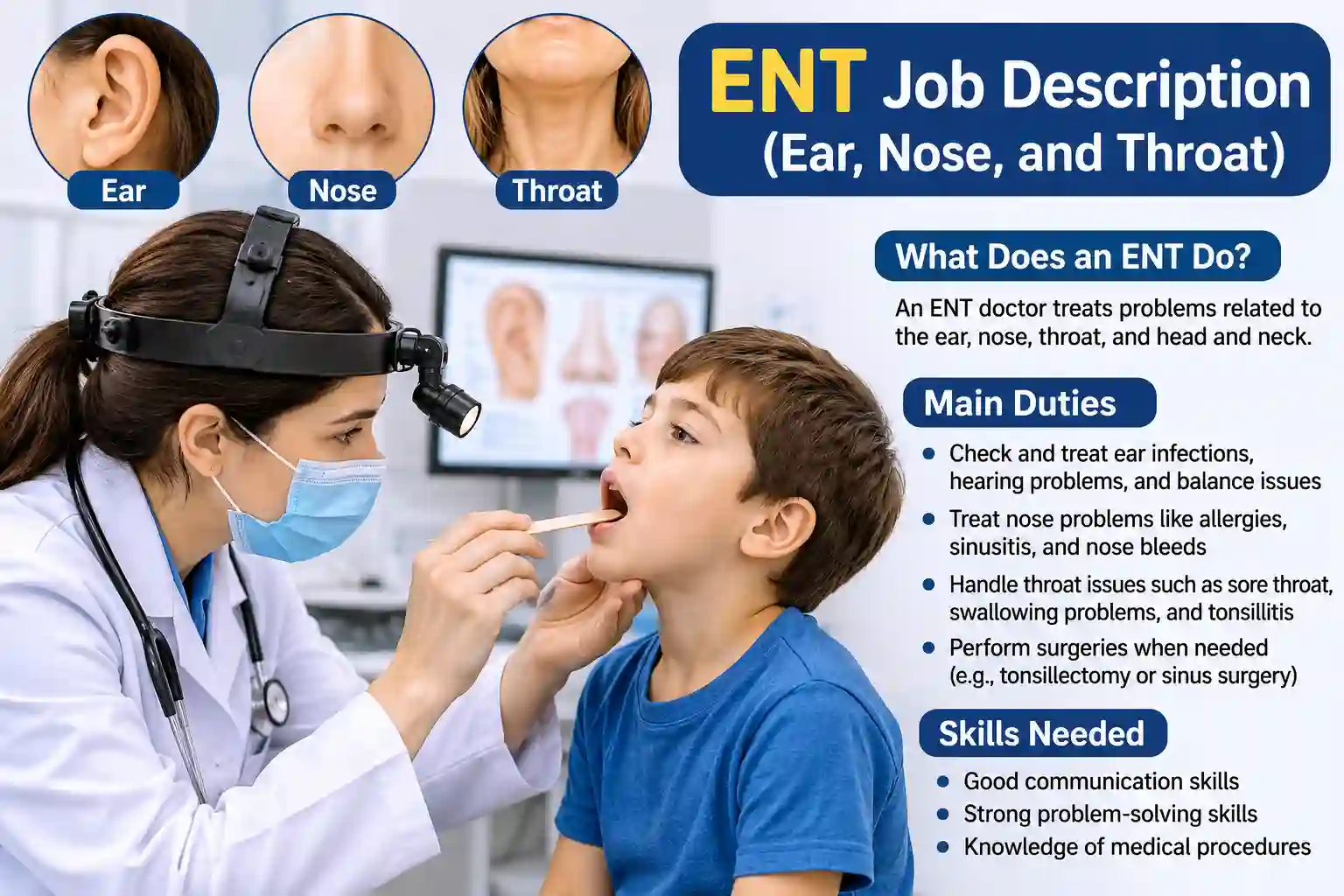
An ENT doctor is a medical professional who treats health problems related to the ears, nose, and throat. ENT doctors help patients with ear infections, hearing loss, sinus problems, throat pain, and other medical conditions.
The ENT job description explains the duties, responsibilities, skills, education, and daily tasks of an ENT doctor. These doctors examine patients, find health problems, suggest treatments, and perform surgery when needed.
ENT is also known as otolaryngology. It is an important medical field because people of all ages can have ear, nose, and throat problems. This guide explains what ENT doctors do, what conditions they treat, and how to build a career in this field.
What Does ENT Stand For?

ENT stands for Ear, Nose, and Throat. It is a medical field that focuses on problems affecting these three body areas.
An ENT doctor checks and treats conditions such as ear infections, hearing loss, sinus infections, throat pain, and voice problems.
ENT doctors may also treat some health problems related to the head and neck.
What Is an ENT Doctor?
An ENT doctor is a medical specialist who treats diseases and health problems of the ears, nose, and throat.
An ENT doctor is also called an otolaryngologist. This is the medical name for a specialist who works in this field.
Otolaryngologist pronunciation can be written as “oh-toe-lair-in-GOL-uh-jist.” These doctors may work in hospitals, private clinics, medical centers, and specialist care centers.
What Is Otolaryngology?
Otolaryngology is the medical field that focuses on the ears, nose, throat, head, and neck.
Doctors in this field diagnose health problems, provide treatment, and perform operations when needed.
Otolaryngology also includes different specialist areas, such as neurotology, rhinology, laryngology, pediatric otolaryngology, and head and neck surgery.
Some ENT doctors focus on general care, while others receive extra training in one area.
ENT Job Description
An ENT doctor examines, diagnoses, and treats patients with ear, nose, and throat problems. The doctor checks symptoms, reviews medical history, orders tests, and creates treatment plans.
The main goal is to help patients feel better and improve their hearing, breathing, speaking, and swallowing.
An ENT specialist may also work with nurses, audiologists, technicians, and other healthcare professionals to provide safe patient care.
ENT Doctor Duties and Responsibilities
An ENT doctor’s daily duties may include:
- Examining patients with ear, nose, and throat problems.
- Asking patients about their symptoms and medical history.
- Checking hearing, breathing, and throat health.
- Finding the cause of infections and other conditions.
- Ordering medical tests when needed.
- Giving medicine and treatment advice.
- Performing minor medical procedures.
- Carrying out surgery when properly trained.
- Keeping patient records up to date.
- Explaining treatment plans to patients.
- Working with nurses and other medical staff.
- Checking patients after treatment or surgery.
What Does an ENT Doctor Treat?
ENT doctors treat many health problems that affect the ears, nose, throat, head, and neck.
Ear Problems
ENT doctors may treat:
- Ear infections.
- Hearing loss.
- Tinnitus.
- Dizziness and vertigo.
- Ménière’s disease.
- Otosclerosis.
- Cholesteatoma.
- Eustachian tube dysfunction.
- Ruptured eardrum.
- Balance problems.
Tinnitus is a condition in which a person hears ringing or buzzing sounds without an outside sound. Ménière’s disease can cause dizziness, hearing changes, and ringing in the ears.
Cholesteatoma is an abnormal growth of skin cells in the middle ear. Eustachian tube dysfunction happens when the small tube that helps balance ear pressure does not work properly.
Nose and Sinus Problems
ENT doctors may treat:
- Sinusitis.
- Chronic rhinosinusitis.
- Nasal polyps.
- Deviated septum.
- Nasal congestion.
- Nosebleeds.
- Nasal allergies.
- Nasal obstruction.
- Sinus pressure.
Sinusitis is swelling or infection in the sinus areas. Nasal polyps are soft growths inside the nose that may make breathing difficult.
Throat and Voice Problems
ENT doctors may treat:
- Tonsillitis.
- Sore throat.
- Laryngitis.
- Hoarseness.
- Vocal cord disorders.
- Vocal fold paralysis.
- Swallowing problems.
- Chronic cough.
- Throat infections.
Laryngitis causes swelling of the voice box and may make the voice weak or rough. Vocal fold problems can affect speaking and breathing.
Sleep and Breathing Problems
Some ENT specialists help patients with:
- Snoring.
- Obstructive sleep apnea.
- Airway obstruction.
- Breathing problems during sleep.
- Enlarged tonsils and adenoids.
Sleep apnea causes breathing to stop and start many times during sleep. An ENT doctor may check the nose, throat, and airway to find possible causes.
Head and Neck Conditions
ENT doctors may also diagnose and treat some conditions related to the head and neck, such as:
- Thyroid disorders.
- Parathyroid disorders.
- Salivary gland tumors.
- Head and neck cancers.
- Oral cancer.
- Laryngeal cancer.
- Nasal and sinus tumors.
- Neck masses.
Some complex conditions need care from a team of medical specialists.
What Does an ENT Doctor Do During a Typical Day?

An ENT doctor’s daily routine depends on the workplace and type of patients.
A normal workday may include:
- Meeting new patients.
- Checking ear, nose, and throat symptoms.
- Performing physical examinations.
- Reviewing test results.
- Prescribing medicines.
- Performing medical procedures.
- Taking part in scheduled surgeries.
- Meeting patients after treatment.
- Updating medical records.
- Discussing complex cases with other doctors.
Some doctors spend most of their time in clinics, while others work in hospitals and operating rooms.
ENT Specialist Job Description
An ENT specialist is a doctor who has special training in treating ear, nose, and throat conditions.
Their responsibilities include examining patients, diagnosing health problems, creating treatment plans, and monitoring recovery.
Some ENT specialists focus on one area of the field, such as hearing, sinus health, children’s ENT care, or voice problems.
ENT Surgeon Job Description
An ENT surgeon is a specialist who performs operations related to the ears, nose, throat, head, and neck.
Their duties may include:
- Checking patients before surgery.
- Explaining surgical options and risks.
- Performing approved surgical procedures.
- Working with the surgical team.
- Monitoring patients after surgery.
- Checking recovery and treating complications.
- Keeping surgical records.
ENT surgeons need proper training and experience before performing operations.
What Is Otolaryngology Surgery?
Otolaryngology surgery includes operations that treat problems of the ears, nose, throat, head, and neck.
Common procedures include:
Tonsillectomy: An operation to remove the tonsils.
Adenoidectomy: An operation to remove the adenoids.
Sinus surgery: Surgery to improve sinus drainage and treat certain sinus problems.
Cochlear implantation: A procedure that places an electronic device to help some people with severe hearing loss.
Ear tube surgery: A procedure that places small tubes in the eardrum to help drain fluid and improve ear pressure.
Endoscopic sinus surgery: A procedure that uses a small camera and special tools to treat certain sinus conditions.
Some advanced ENT surgeons also perform head and neck tumor removal, thyroid surgery, and reconstructive procedures.
Pediatric ENT Job Description

A pediatric ENT doctor treats ear, nose, and throat problems in babies, children, and teenagers.
Their duties include:
- Examining children’s ears, nose, and throat.
- Treating ear infections.
- Checking hearing problems.
- Helping with speech-related concerns.
- Treating tonsil and adenoid problems.
- Finding causes of breathing problems.
- Explaining treatments to parents.
- Following up on children’s health.
Pediatric ENT doctors need good communication skills because they work with both children and their families.
ENT Medical Assistant Job Description
An ENT medical assistant supports doctors and helps with daily clinic tasks.
Their responsibilities may include:
- Welcoming patients.
- Preparing examination rooms.
- Checking basic patient information.
- Recording vital signs.
- Preparing medical tools.
- Helping doctors during examinations.
- Updating patient records.
- Scheduling appointments.
Medical assistants work under the direction of qualified healthcare professionals.
ENT Nurse Job Description
An ENT nurse provides care to patients with ear, nose, and throat conditions.
Their duties may include:
- Checking patients before appointments.
- Recording vital signs.
- Giving medicines as directed.
- Helping doctors during procedures.
- Teaching patients about their care.
- Supporting patients after surgery.
- Updating nursing records.
ENT nurses help patients feel safe and comfortable during treatment.
ENT Assistant Job Description
An ENT assistant helps the medical team with patient care and clinic duties.
They may prepare rooms, organize medical tools, guide patients, manage appointments, and support doctors during examinations.
The exact duties depend on the clinic, hospital, and job requirements.
ENT Technician Job Description
An ENT technician helps doctors perform tests and use medical equipment.
Their duties may include:
- Preparing testing equipment.
- Helping with hearing tests.
- Performing assigned diagnostic tests after proper training.
- Checking and cleaning equipment.
- Recording test results.
- Supporting doctors during examinations.
Some ENT technicians work closely with audiologists and other hearing care professionals.
ENT Nurse Practitioner Job Description
An ENT nurse practitioner is an advanced practice nurse who provides care within their education, training, and legal scope of practice.
Their duties may include examining patients, reviewing symptoms, managing some common conditions, ordering tests, and helping create treatment plans.
Their exact responsibilities and authority depend on local laws and professional licensing rules.
Important ENT Specialist Fields
Otolaryngology has several specialist areas. Each area focuses on different health problems.
Neurotology
Neurotology focuses on complex ear conditions, hearing problems, balance disorders, and some nerve-related conditions.
Otology
Otology focuses mainly on diseases of the ear and hearing system.
Rhinology
Rhinology focuses on the nose, sinuses, and related conditions. Rhinologists may treat chronic sinusitis, nasal polyps, and nasal obstructions.
Laryngology
Laryngology focuses on the voice box, vocal folds, swallowing, and voice disorders.
Pediatric Otolaryngology
Pediatric otolaryngology focuses on ear, nose, and throat conditions in babies and children.
Head and Neck Surgery
This area focuses on conditions and tumors affecting the head and neck. It may include thyroid, salivary gland, and certain cancer surgeries.
Facial Plastic and Reconstructive Surgery
This field focuses on repairing or changing parts of the face and nearby areas. Procedures may include rhinoplasty, otoplasty, and facial reconstruction.
Sleep Surgery
Sleep surgery focuses on certain operations that may help patients with obstructive sleep apnea and airway problems.
ENT Doctor Education and Qualifications

Becoming an ENT doctor requires years of medical education and specialist training.
Common steps include:
- Complete the required school education.
- Enter a recognized medical school.
- Earn a medical degree, such as an MBBS or MD.
- Complete the required internship or clinical training.
- Apply for ENT specialist training.
- Complete approved residency or postgraduate training.
- Meet local licensing and registration requirements.
In Pakistan, doctors may follow recognized postgraduate pathways such as FCPS or MS in ENT. Requirements can vary, so candidates should check the current rules of the relevant medical and training authorities.
Board Certification and Fellowship Training
Board certification shows that a doctor has met the professional requirements of a medical board. The exact process depends on the country.
Some ENT doctors also complete fellowship training after residency. This gives them extra knowledge and skills in areas such as neurotology, rhinology, pediatric ENT, or head and neck surgery.
Continuing medical education helps doctors keep their knowledge and skills up to date.
Important Skills for an ENT Doctor
An ENT doctor needs medical knowledge and good communication skills.
Communication: Doctors must explain health problems and treatments in simple words.
Problem-solving: They need to understand symptoms and find possible causes.
Attention to detail: Small details can help doctors make better medical decisions.
Patient care: Doctors should treat patients with kindness and respect.
Teamwork: ENT doctors work with nurses, technicians, audiologists, and other specialists.
Decision-making: They must choose safe and suitable treatment options.
Surgical skills: ENT surgeons need special training and practical skills to perform operations.
Time management: Doctors need to manage appointments, patient records, and treatment schedules.
Where Do ENT Doctors Work?
ENT doctors can work in different healthcare settings, including:
- Public hospitals.
- Private hospitals.
- ENT clinics.
- Medical centers.
- Children’s hospitals.
- Teaching hospitals.
- Academic medical centers.
- Comprehensive cancer centers.
- Ambulatory surgery centers.
- Private medical practices.
- University-affiliated medical programs.
Some ENT doctors also work in medical research, teaching, and specialist training programs.
ENT Doctor Work Environment
ENT doctors work with patients, nurses, medical assistants, technicians, audiologists, and other doctors.
Their work may take place in examination rooms, clinics, hospital wards, and operating rooms.
They use medical tools to examine the ears, nose, and throat. They may also use hearing test equipment, small cameras, and other diagnostic devices.
The work can be busy because doctors may see many patients and handle urgent medical problems.
ENT Doctor Working Hours
ENT doctors may work regular clinic hours, but their schedules depend on their workplace.
Doctors in hospitals may work shifts, weekends, or emergency hours. Surgeons may also have scheduled operations and on-call duties.
Private clinic doctors may have more control over their appointment schedules.
ENT Doctor Salary
ENT salary depends on several factors, such as:
- Country and city.
- Medical qualifications.
- Years of experience.
- Type of hospital or clinic.
- Specialist training.
- Number of working hours.
- Surgical experience.
- Private or public practice.
An experienced ENT surgeon may earn more than a doctor who is starting a career. Salary information should always be checked for the country and year in question.
ENT Job Description for Resume

If you are applying for an ENT-related job, your resume should show your education, skills, and work experience.
Professional Summary
Dedicated medical professional with knowledge of ear, nose, and throat care. Skilled in patient communication, medical examinations, treatment support, and healthcare teamwork.
ENT Job Responsibilities for Resume
- Examined patients with ear, nose, and throat conditions.
- Assisted doctors during medical examinations.
- Maintained accurate patient records.
- Supported patient care before and after procedures.
- Helped prepare medical equipment.
- Explained basic care instructions to patients.
- Worked with nurses and other healthcare staff.
Only include duties and skills that match your real training and experience.
Sample ENT Job Description for Employers
Job Title: ENT Specialist
Job Summary:
We are looking for a qualified ENT specialist to examine, diagnose, and treat patients with ear, nose, and throat conditions. The selected candidate will provide patient care and work with other healthcare professionals.
Main Responsibilities:
- Examine patients and review medical history.
- Diagnose ENT-related health conditions.
- Recommend suitable treatments.
- Perform procedures within professional qualifications.
- Refer patients for further care when needed.
- Maintain patient records.
- Follow medical safety standards.
- Work with other medical professionals.
Qualifications:
- Recognized medical degree.
- Approved specialist training in ENT.
- Valid professional registration.
- Good communication skills.
- Strong patient care skills.
- Relevant clinical experience.
Difference Between an ENT Doctor, Nurse, and Technician
These healthcare professionals have different roles.
All three roles support patient care, but their education and responsibilities are different.
ENT Doctor vs Audiologist
An ENT doctor and an audiologist both help people with hearing problems, but their roles are different.
An ENT doctor is a medical specialist who can diagnose and treat ear diseases and other ENT conditions.
An audiologist focuses on hearing and balance testing, hearing loss care, and hearing devices. Audiologists do not have the same medical and surgical role as ENT doctors.
ENT Doctor vs Allergist
An ENT doctor treats conditions of the ears, nose, and throat. An allergist focuses on allergies and immune system conditions.
A patient with long-term nasal allergies may need help from either specialist, depending on their symptoms and medical needs. Sometimes both doctors work together.
How to Become an ENT Doctor
To become an ENT doctor, you must first complete medical school and earn a recognized medical degree.
After that, you need clinical training and specialist education in otolaryngology. You must also meet the licensing rules in your country.
Some doctors continue their education through fellowship training and board certification. These qualifications may help them focus on a special area of ENT care.
This career requires patience, hard work, medical knowledge, and a strong interest in helping people.
ENT Career Opportunities
ENT offers different career paths for trained medical professionals.
Doctors may work in general ENT care or choose a special area after further training.
Career opportunities may include:
- General ENT specialist.
- Pediatric ENT specialist.
- Neurotologist.
- Otologist.
- Rhinologist.
- Laryngologist.
- Head and neck surgeon.
- Facial plastic and reconstructive surgeon.
- Sleep surgery specialist.
- Medical teacher.
- Clinical researcher.
- ENT department leader.
Some doctors work in hospitals, while others choose private practice, academic medicine, or research.
Common ENT Tests and Examinations

ENT doctors use different tests to understand a patient’s condition.
Hearing tests: These check how well a person can hear different sounds.
Nasal endoscopy: A small camera helps the doctor look inside the nose.
Throat examination: The doctor checks the throat, tonsils, and nearby areas.
Balance tests: These help find possible causes of dizziness and balance problems.
Imaging tests: A doctor may request scans, such as a CT scan or MRI, when more information is needed.
Laryngoscopy: This test helps the doctor look at the voice box and vocal folds.
The type of test depends on the patient’s symptoms and medical needs.
When Should You See an ENT Doctor?
You may need to visit an ENT doctor if you have:
- Long-lasting ear pain.
- Hearing problems.
- Repeated ear infections.
- Frequent nosebleeds.
- Long-lasting sinus problems.
- Trouble swallowing.
- Ongoing throat pain.
- Voice changes that do not improve.
- Breathing problems during sleep.
- Repeated dizziness or balance problems.
Seek urgent medical help for severe breathing difficulty, serious bleeding, or other emergency symptoms.
If you search for an otolaryngologist near me, look for a qualified ENT specialist at a hospital, clinic, or medical center. Check the doctor’s qualifications, experience, and professional registration before booking an appointment.
Common ENT Interview Questions
People applying for ENT jobs may be asked:
What does ENT stand for?
ENT stands for Ear, Nose, and Throat.
What is an otolaryngologist?
An otolaryngologist is a medical doctor who treats ear, nose, throat, head, and neck conditions.
What are the main duties of an ENT doctor?
The main duties include examining patients, diagnosing conditions, planning treatment, and performing procedures when qualified.
What skills are important for an ENT doctor?
Communication, problem-solving, attention to detail, teamwork, and medical knowledge are important skills.
What is the difference between otology and rhinology?
Otology focuses on ear conditions, while rhinology focuses on the nose and sinuses.
What is board certification?
Board certification shows that a doctor has met the requirements of a professional medical board.
Where can ENT doctors work?
They can work in hospitals, private clinics, medical centers, teaching hospitals, and specialist surgery centers.
FAQs About ENT Job Description
ENT stands for Ear, Nose, and Throat.
An ENT doctor is called an otolaryngologist.
An ENT specialist examines and treats problems related to the ears, nose, throat, head, and neck.
An ENT doctor provides medical care for ENT conditions. An ENT surgeon also performs operations after receiving the required surgical training.
An ENT medical assistant supports doctors with patient preparation, clinic tasks, basic checks, and medical records.
It is surgery used to treat conditions affecting the ears, nose, throat, head, and neck.
It takes several years of medical school and additional specialist training. The exact time depends on the country and training pathway.
Yes. ENT doctors can treat children. Pediatric ENT specialists receive extra training in the care of babies and children.
Neurotology is a specialist area that focuses on complex ear conditions, hearing, balance, and related nerve problems.
Rhinology is the study and treatment of conditions affecting the nose and sinuses.
Laryngology focuses on the voice box, vocal folds, voice problems, and swallowing conditions.
An ENT doctor treats medical conditions of the ears, nose, and throat. An audiologist focuses mainly on hearing and balance care.
ENT doctor salary depends on location, experience, qualifications, workplace, and specialist skills.
Final Thoughts
The ENT job description includes many important duties related to ear, nose, throat, head, and neck care. ENT doctors examine patients, diagnose health problems, recommend treatments, and perform surgery when needed.
This medical field offers many career paths, including pediatric ENT care, neurotology, rhinology, laryngology, and head and neck surgery.
A career in ENT requires proper medical education, specialist training, strong communication skills, and a caring attitude toward patients. With the right qualifications and experience, doctors can build a rewarding career in this field.

Sarah Whitman writes job descriptions and role guides that explain duties, skills and requirements in a clear, organized way. She covers technical, office and everyday roles, so job seekers, students and hiring teams can quickly see what a position involves.