

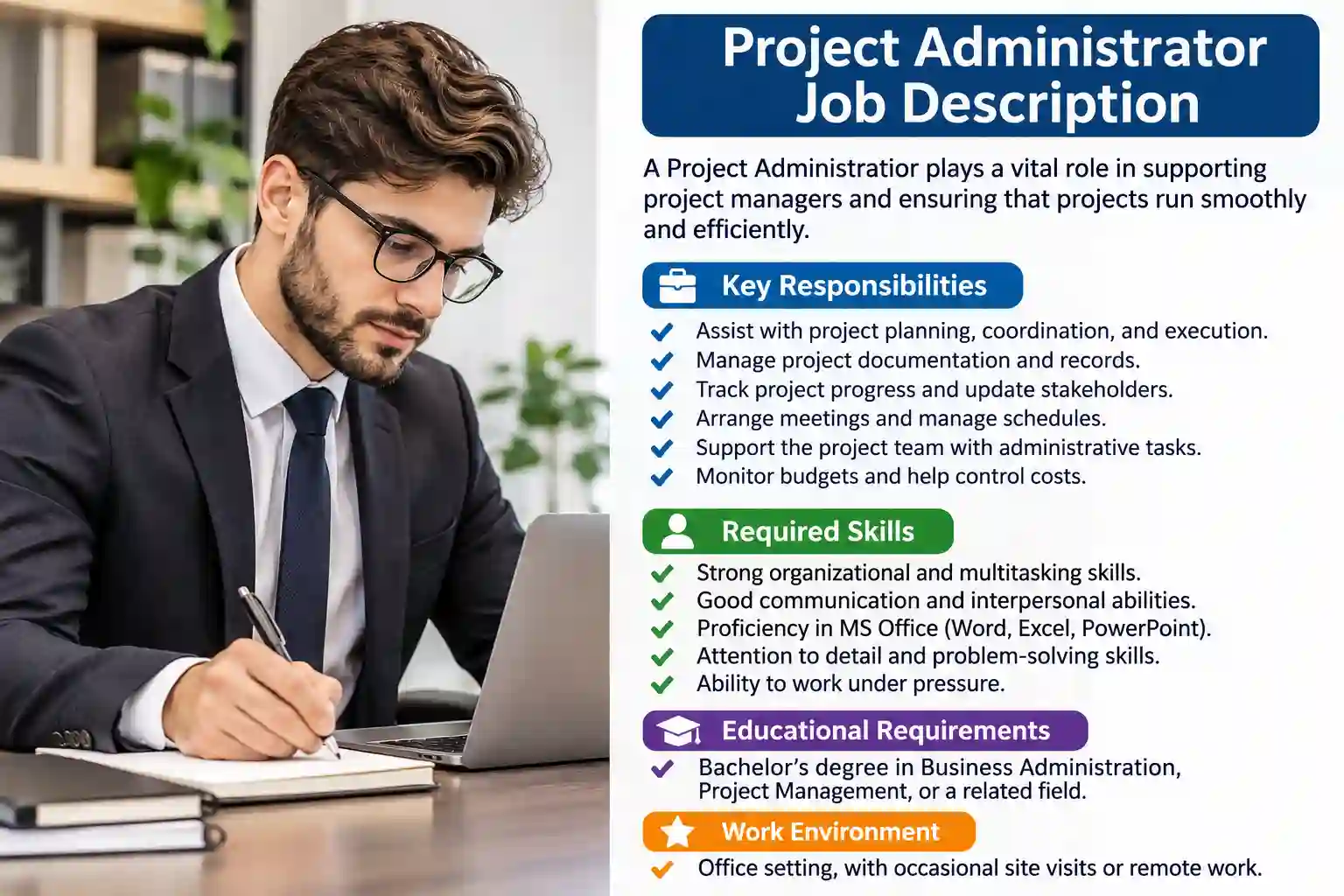
A project administrator helps a team plan, organize, and complete projects. This person manages project documents, plans meetings, updates schedules, and prepares reports. They also help project managers, workers, clients, and other team members share information.
Project administrators work in many fields, such as construction, business, finance, healthcare, and technology. Their duties can change based on the company and project type. Some work mostly in an office, while others support teams at project sites.
This guide explains the project administrator job description, daily duties, skills, education, salary, resume tips, and career growth. It also covers construction work, project management tools, contracts, risk management, and other important parts of the job.
What Is a Project Administrator?

A project administrator is a person who gives office and planning support to a project team. They help keep project work clear.
A project administrator usually works with a project manager. They may also work with project coordinators, clients, suppliers, contractors, and other team members.
Their main goal is to help the team complete its work on time and within the planned budget.
Project Administrator Job Description Template
Employers can use this simple project administrator job description when they need to hire someone.
Job Title: Project Administrator
Department: Project Management
Job Type: Full-time or Part-time
Reports To: Project Manager or Project Director
Job Summary:
We are looking for an organized and helpful project administrator to support our project team. The right person will manage documents, arrange meetings, update schedules, prepare reports, and help track project progress.
The candidate should have good communication, computer, and time management skills. They should be able to work with different people and complete tasks before deadlines.
Main Responsibilities:
- Organize and update project files.
- Prepare reports and meeting notes.
- Update project schedules and calendars.
- Track tasks, goals, and deadlines.
- Help record project costs and expenses.
- Support contract and purchase order records.
- Arrange meetings and share meeting agendas.
- Communicate with clients and team members.
- Help check project risks and possible problems.
- Support quality checks and project reviews.
- Help the project manager with daily tasks.
- Keep project information safe and correct.
Main Duties of a Project Administrator
A project administrator handles many tasks during a project. These duties help the team stay organized and work toward the same goal.
Managing Project Documents
Project administrators create, save, update, and organize project documents. These may include plans, reports, contracts, forms, and meeting notes.
They use document control to keep files in the right place. They also make sure team members can find the latest version of each document.
Some projects use shared folders, document systems, and project records to keep information easy to find.
Planning and Scheduling Meetings
Project administrators arrange meetings between project managers, workers, clients, and other people.
They send meeting invitations and prepare meeting agendas. They may also write meeting minutes to record important points, decisions, and next steps.
These records help team members understand what they need to do after a meeting.
Tracking Project Progress
A project administrator helps track project progress. They update task lists, project trackers, and schedules.
They may also prepare project performance reports. These reports help managers see which tasks are complete and which tasks need more attention.
If a task is late, the administrator can inform the project manager or the right team member.
Managing Project Schedules
They help update project timelines, calendars, and work plans. They also track important dates and project milestones.
A milestone is an important point in a project. It may show that a major task or stage is complete.
Supporting Project Budgets
Some project administrators help track project costs and expenses. They may record invoices, purchase orders, and payments.
They can also help prepare cost reports and collect information for future cost forecasts.
The project manager or finance team usually makes the main budget decisions.
Supporting Project Communication
Project administrators share updates between team members, clients, suppliers, and managers.
They may answer emails, manage a shared inbox, and pass important messages to the right person.
Good communication helps people understand their duties and avoid confusion.
Helping With Project Quality
Some project administrators help the team check project work against quality standards.
They may organize quality records, collect reports, and share information about missing documents.
The project manager and quality team usually make important quality decisions.
Daily Tasks of a Project Administrator

The daily routine depends on the company and type of project.
Common daily tasks include:
- Checking emails and messages.
- Updating project files.
- Preparing reports.
- Booking meetings.
- Writing meeting minutes.
- Checking task deadlines.
- Updating project trackers.
- Recording invoices and expenses.
- Sharing project updates.
- Organizing contracts and forms.
- Following up on missing information.
- Helping the project manager.
Some days may focus on office work. Other days may include meetings with clients, suppliers, contractors, or site workers.
Project Administrator Skills
A good project administrator needs technical and personal skills. These skills help them manage information and support the team.
Communication Skills
They should be able to write clear emails and speak with different people. They must share correct information with team members and clients.
Organization Skills
They need to keep files, reports, schedules, and records in order.
Time Management
They should plan their work and complete tasks before deadlines.
Computer Skills
Project administrators often use Microsoft Word, Excel, Outlook, and other office tools.
Attention to Detail
They should check names, dates, numbers, and documents carefully. Small mistakes can cause delays.
Problem-Solving Skills
They should be able to notice problems and tell the right person. They may also help find simple ways to improve daily work.
Teamwork and Collaboration
They work with many people, so they need to be helpful, respectful, and ready to share information.
Working Under Pressure
Some projects have tight deadlines and many tasks. A good administrator stays calm and works through tasks in a clear order.
Initiative and Accountability
They should take responsibility for their work and ask questions when they need help. They should also follow up on tasks instead of waiting for others to remind them.
Technical Skills for a Project Administrator
Technical skills help project administrators use tools and manage project information.
Useful skills include:
- Microsoft Word.
- Microsoft Excel.
- Microsoft Outlook.
- Microsoft PowerPoint.
- Project scheduling.
- Data entry.
- Report writing.
- Document control.
- Basic budget tracking.
- Flowcharts and task lists.
- Project management software.
Some jobs may also need knowledge of technical documents, project trackers, and cost records.
Project Management Software and Tools

Project administrators use different tools to plan work and share information.
Microsoft Project
Microsoft Project helps teams create schedules and track project tasks.
Trello
Trello helps people organize tasks using boards and cards.
Asana
Asana helps teams plan work, assign tasks, and follow project progress.
Jira
Jira is used by many teams to manage tasks, work, and project issues.
Procore
Procore is a construction management platform. It can help teams manage construction documents and project information.
Timberline Construction Accounting Software
Some construction companies use Timberline tools to support accounting and project cost records.
Other Office Tools
Microsoft Word, Excel, Outlook, and PowerPoint are useful for reports, emails, budgets, and presentations.
Not every company uses the same software. Some employers provide training for their own systems.
Project Administrator Qualifications and Requirements
Many employers ask for a high school diploma or an equal qualification. Some jobs may require a college degree in business administration, project management, accounting, or a related subject.
Common requirements include:
- Good written and spoken communication.
- Basic computer knowledge.
- Strong organization skills.
- Experience with office tasks.
- Knowledge of project documents.
- Ability to work with a team.
- Good time management.
- Careful record keeping.
Some employers prefer people who have worked in project administration, project coordination, or office administration before.
Project Administrator Certifications and Training
Some employers prefer candidates who have extra training in project management.
Useful learning options include:
- Business administration courses.
- Project management training.
- Microsoft Office courses.
- Document control training.
- Construction administration courses.
- Basic accounting training.
PRINCE2 and PMP are well-known project management certifications. They can help people understand project work, but they are not required for every project administrator job.
PRINCE2 explains how projects can be planned, managed, and checked through clear steps. PMP is another project management certification.
Always check the job requirements before choosing a course or certification.
Junior Project Administrator Job Description
A junior project administrator is usually an entry-level worker. They help with basic office and project tasks while learning how the team works.
Common duties include:
- Entering project information.
- Organizing files.
- Booking meetings.
- Preparing simple reports.
- Updating calendars.
- Answering emails.
- Recording meeting notes.
- Supporting senior team members.
This role can be a good starting point for people who want to build a career in project administration.
Senior Project Administrator Job Description
A senior project administrator has more work experience. They may support larger projects and handle more complex tasks.
Their duties may include:
- Managing important project records.
- Checking reports and documents.
- Supporting project managers.
- Tracking budgets and schedules.
- Helping train junior staff.
- Working with clients and suppliers.
- Improving office processes.
- Helping with project reviews.
A senior project administrator may also guide other administrative team members.
Assistant Project Administrator Job Description
An assistant project administrator helps the main project administrator and project manager.
They may organize documents, update records, prepare meeting notes, book meetings, and answer basic questions from team members.
This role is useful for people who want to gain experience in project administration.
Program or Project Administrator Job Description

A program or project administrator may support one project or several connected projects.
A program can include many related projects that work toward a larger goal.
The administrator may organize records, update schedules, prepare reports, and help different teams share information.
Special Project Administrator Job Description
A special project administrator supports a project with a specific goal or time limit.
They may help with planning, meeting arrangements, document control, progress updates, and communication between departments.
The duties depend on the type and size of the project.
Construction Project Administrator Job Description
A construction project administrator supports construction teams with office and project tasks.
They may work with project managers, engineers, contractors, subcontractors, suppliers, and site workers.
Common duties include:
- Organizing construction documents.
- Managing drawings and project files.
- Tracking contracts and changing orders.
- Recording invoices and purchase orders.
- Arranging meetings with contractors.
- Updating project schedules.
- Supporting safety and quality records.
- Sharing updates with site teams.
- Checking missing project documents.
- Helping with project close-out.
They may also help manage pre-bid packages and subcontractor records.
Construction Contracts and Change Orders
Construction projects often use contracts to explain the work, costs, and duties of each party.
A project administrator may organize contract documents, subcontracts, and contract changes.
A change order is a document that records an approved change to the planned work.
They may also track work orders, purchase orders, and contract approvals.
Subcontractors and Vendors
A subcontractor is a person or company hired to complete part of a larger project. A vendor supplies goods or services.
A construction project administrator may collect their documents and keep their records updated.
These records can include insurance details, W-9 forms where required, and other approval documents.
Project Close-Out
Project close-out is the final stage of a project. The team checks that the work and required documents are complete.
The administrator may organize final reports, approved changes, warranties, and other close-out records.
Project Site Administrator Job Description
A project site administrator usually works at or near a project site.
They support site managers and workers with daily office tasks.
Their duties may include keeping attendance records, organizing site documents, managing deliveries, updating project trackers, and sharing information with the main office.
They may also help with site meeting notes and other project records.
Capital Project Administrator Job Description
A capital project administrator supports large projects that involve spending money on buildings, equipment, roads, or other important assets.
They may help track project costs, organize approval documents, update reports, and support budget records.
They also help keep project information ready for managers and finance teams.
Project Finance Administrator Job Description
A project finance administrator helps manage the financial records of a project.
Common duties include:
- Recording project expenses.
- Checking invoices.
- Updating budget records.
- Preparing cost reports.
- Tracking purchase orders.
- Supporting payment records.
- Sharing financial updates.
- Helping with cost forecasts.
They may work with accountants, finance managers, and accounts payable teams.
Project Contract Administrator Job Description
A project contract administrator helps manage project contracts and related documents.
They may organize agreements, track contract dates, record changes, and communicate with suppliers or contractors.
They may also help check that required documents are complete and that contract records are easy to find.
Project Control Administrator Job Description
A project control administrator helps track project information, such as schedules, costs, tasks, and reports.
They update project trackers and help prepare reports for managers.
They may also support risk and issue records so the team can follow problems and changes.
Project Management Administrator Job Description
A project management administrator provides office and planning support to a project management team.
Their duties may include managing documents, arranging meetings, preparing reports, updating project plans, and helping with communication.
Project Support Administrator Job Description
A project support administrator helps project teams complete daily tasks.
They may organize files, update records, prepare meeting notes, and share project information.
The role is often similar to project administration, but the exact duties depend on the employer.
Project Coordinator Administrator Job Description
A project coordinator administrator combines office work with some coordination tasks.
They may help arrange project activities, follow up on deadlines, contact team members, and update project schedules.
Project Office Administrator Job Description
A project office administrator supports the daily work of a project office.
They may manage office records, book meetings, organize supplies, answer calls, and help project staff.
Project Management Office Administrator Job Description

A project management office administrator, also called a PMO administrator, supports a Project Management Office.
A PMO helps a company follow shared project rules and work methods.
The administrator may organize project reports, update shared records, prepare meeting documents, and help teams follow project standards.
They may also help with project boards, project reviews, and shared inboxes.
Projects Administrator Job Description
The title project administrator is often used for a person who supports more than one project.
Their tasks may include record keeping, meeting planning, reporting, and communication.
The role is similar to a project administrator, but the exact work depends on the company.
Project Administrator Resume: What to Include
A project administrator resume should show that you can organize work, manage records, and support a team.
Contact Information
Add your name, phone number, email address, and city.
Professional Summary
Write a short paragraph about your experience and skills.
Example:
“Organized and hardworking administrative professional with good communication and computer skills. Able to manage records, prepare reports, and support project teams.”
Work Experience
List your previous jobs and explain your main duties.
Use clear action words such as:
- Managed.
- Organized.
- Prepared.
- Updated.
- Supported.
- Tracked.
- Coordinated.
Skills
Include skills such as project documentation, Microsoft Excel, communication, time management, meeting planning, report writing, and teamwork.
Education and Training
Add your education, computer courses, and useful project management training.
If you are new to this career, you can include internships, school projects, or other office experience.
Project Administrator Cover Letter
A cover letter is a short letter that you send with your resume when applying for a job.
It should explain why you want the job and what skills you can bring to the company.
A good project administrator cover letter can include:
- Your interest in project administration.
- Your communication and organization skills.
- Your computer knowledge.
- Your experience with documents or reports.
- Your ability to work with a team.
- Your interest in learning new tools.
Keep the letter clear, polite, and focused on the job.
Project Administrator Salary
A project administrator’s salary depends on several factors.
These may include:
- Location.
- Work experience.
- Education.
- Company size.
- Project type.
- Industry.
- Job duties.
A junior project administrator may earn less than a senior project administrator.
A person with special skills in construction, accounting, or contract management may have different pay from someone who handles basic office tasks.
To understand the salary in your area, check recent job advertisements and trusted salary websites.
Project Administrator Job Description and Salary
A project administrator job advertisement may include both job duties and salary details.
It may explain:
- Main responsibilities.
- Required education.
- Needed experience.
- Working hours.
- Salary range.
- Extra benefits.
- Job location.
- Reporting manager.
Always read the full job advertisement because two jobs with the same title may have different duties and pay.
Project Administrator Salary in Australia
Project administrator salaries in Australia can change by state, city, company, and experience.
Construction, government, finance, and business projects may offer different pay.
A junior worker may earn less than a senior project administrator. Jobs with extra contract, finance, or technical duties may also have different salary ranges.
For the latest information, check current Australian job listings and salary websites.
Project Administrator vs Project Coordinator
A project administrator and a project coordinator both support project teams, but their daily.
Some companies use these job titles in similar ways. Always read the job description to understand the real duties.
Project Administrator vs Project Manager

A project administrator supports the project team, while a project manager leads the project.
Both roles work together to help a project succeed.
Project Risk and Issue Management
Projects can face risks and problems. A risk is something that may happen and affect the project. An issue is a problem that has already happened.
A project administrator may help the team keep risk registers and issue logs updated.
A risk register records possible risks and actions that may help reduce them.
An issue log records problems that need attention.
The administrator may also update change control records when a project change is approved.
The project manager usually decides how to deal with important risks and issues.
Project Governance and Standards
Project governance means the rules and steps a team follows to manage a project.
It helps people understand their duties and keeps project work organized.
A project administrator may support governance by keeping records, preparing reports, arranging reviews, and checking that the right documents are available.
Project Planning and Workflows
A workflow is a set of steps used to complete a task.
Clear plans help the team understand its work and stay on schedule.
Project Resources and Equipment
Projects need people, tools, equipment, and other resources.
A project administrator may help collect resource requests, arrange orders, and keep records of equipment and software.
Working Conditions of a Project Administrator
Most project administrators work in an office. Some work at construction sites or other project locations.
The job usually includes computer work, emails, meetings, and communication with different people.
Challenges of Being a Project Administrator
Common challenges include:
- Managing many documents.
- Keeping records correct.
- Communicating with different teams.
- Organizing several meetings.
- Tracking missing information.
Good planning and clear communication can make these tasks easier.
How to Become a Project Administrator
You can start a career in project administration by building basic office and computer skills.
Complete Your Education
Start with a high school diploma or an equal qualification. Some employers may prefer a college degree in business, administration, or project management.
Learn Computer Skills
Practice using Word, Excel, Outlook, and other office tools.
Build Administrative Experience
Look for office assistant jobs, internships, or entry-level administrative roles.
These jobs can help you learn how to manage files, emails, reports, and meetings.
Learn Project Management Basics
Understand project goals, schedules, budgets, deadlines, risks, and team roles.
Apply for Junior Roles
Search for junior project administrator, assistant project administrator, or project support administrator jobs.
Keep Learning
You can improve your career by taking useful courses and gaining more work experience.
Project Administrator Interview Questions and Answers
Employers may ask questions about your organization, communication, and computer skills.
What Does a Project Administrator Do?
A project administrator supports project teams by managing documents, preparing reports, arranging meetings, and updating project records.
What Skills Are Important for This Job?
Organization, communication, time management, computer skills, teamwork, and attention to detail are important.
How Do You Handle a Late Task?
I check the task details, inform the right person, and help update the project records.
How Do You Keep Project Documents Organized?
I use clear file names, save documents in the correct folders, and check that the latest versions are easy to find.
Career Growth for Project Administrators

A project administrator can move into other roles with more experience and training.
Possible career paths include:
- Senior Project Administrator.
- Project Coordinator.
- Project Support Officer.
- Junior Project Manager.
- PMO Analyst.
- PMO Officer.
- Project Manager.
A Project Support Officer, or PSO, helps project teams with reports, records, and other support tasks.
A PMO analyst or officer may help review project information and support shared project processes.
Career growth depends on skills, experience, education, and company needs.
Benefits of Being a Project Administrator
This job can help you learn how businesses and project teams work.
Some benefits include:
- Building office and computer skills.
- Working with different people.
- Learning project management.
- Gaining experience in many industries.
- Finding new career opportunities.
- Developing planning and communication skills.
- Learning how projects move from start to finish.
FAQs
The main role is to support project teams with documents, reports, meetings, schedules, and daily office tasks.
The top skills include communication, organization, time management, computer knowledge, teamwork, and attention to detail.
Not every job requires a degree. Some employers accept a high school diploma and relevant office experience, while others prefer.
Yes. Many companies offer junior or assistant project administrator roles for people who are starting their careers.
A project administrator often focuses on records and office tasks.
A project administrator supports the team with daily tasks. A project manager leads the project and makes important decisions.
Yes. Construction project administrators help manage documents, contracts, invoices, schedules, and communication with site teams.
A resume should include contact details, a professional summary, work experience, skills, education, and useful training.
You can find job description templates on career and recruitment websites.
A PMO administrator supports the Project Management Office by organizing project reports, records, meetings, and shared processes.
PRINCE2 is a project management method. It gives teams steps and rules to help plan and manage projects.
No. PMP is not required for every project administrator job. Some employers may prefer project management training or certification.
A senior project administrator manages more complex records, supports project managers, checks reports, and may guide junior staff.
A project risk register is a record of possible problems that may affect a project.
A change order is a document that records an approved change to the planned work, cost, or schedule of a construction project.
Complete your education, learn office software, build administrative experience, study project management basics, and apply for junior roles.
Salary depends on location, experience, industry, and employer. Check current job listings in your area for accurate salary information.
Final Thought
A project administrator plays an important role in keeping projects organized. They manage documents, prepare reports, arrange meetings, update records, and support project managers.
They may also help with contracts, budgets, project schedules, risk records. Their work helps the team share information and complete tasks on time.
This career can be a good choice for people who enjoy planning, office work, teamwork, and communication. With the right skills and experience, a project administrator can move into senior roles, project coordination, or project management.

Sarah Whitman writes job descriptions and role guides that explain duties, skills and requirements in a clear, organized way. She covers technical, office and everyday roles, so job seekers, students and hiring teams can quickly see what a position involves.