

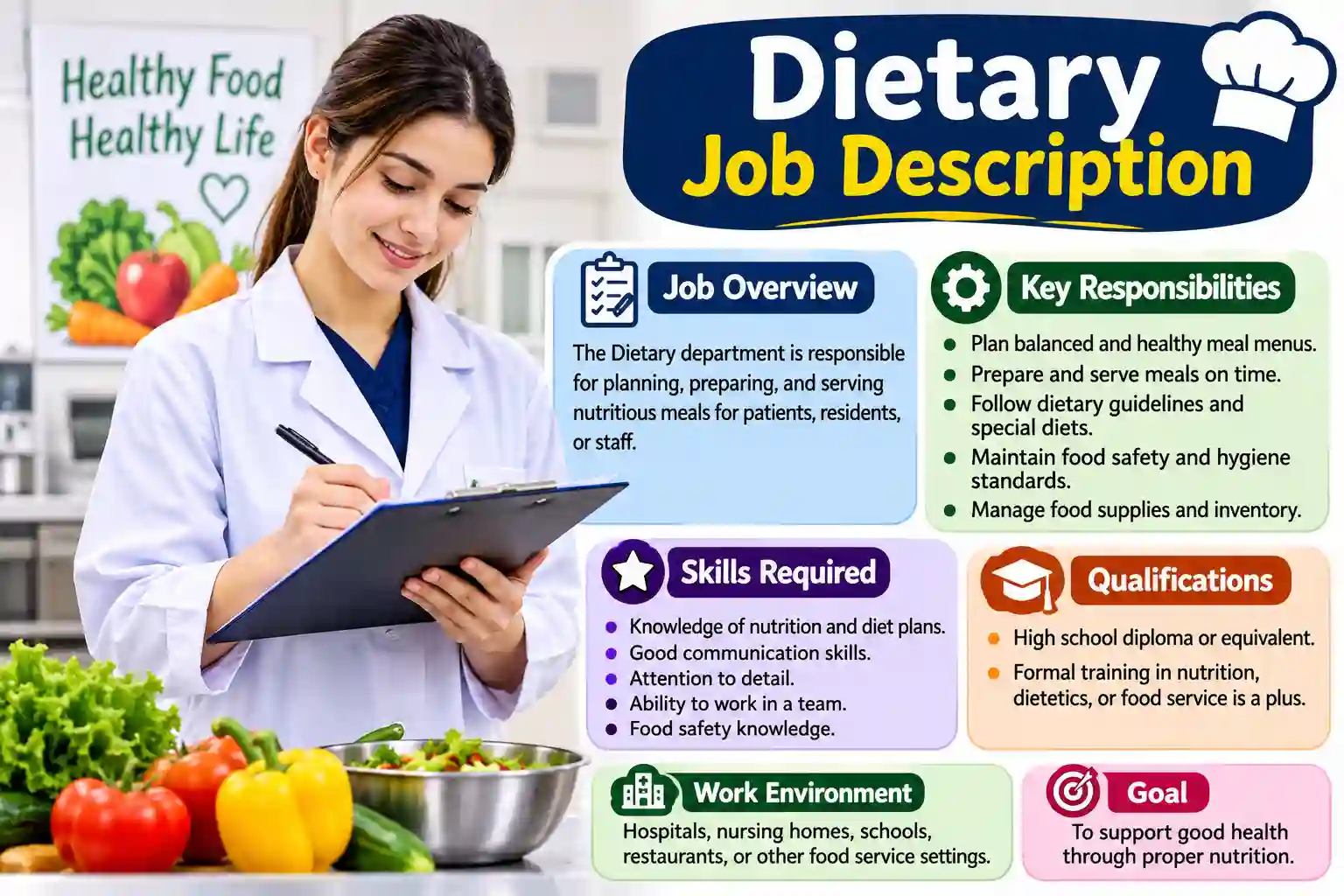
A dietary job is an important part of hospitals, nursing homes, and other care centers. Dietary workers help prepare, serve, and deliver healthy meals.
A dietary aide works with cooks, dietitians, dietary managers, and nursing staff. Their main goal is to make sure patients and residents get the right meals at the right time.
This guide explains the dietary job description, daily duties, skills, job requirements, salary information, and resume examples.
What Is a Dietary Job?

A dietary job is a role that helps with food preparation and meal service. Dietary workers may work in hospitals, nursing homes, assisted living facilities, schools, and other care centers.
They help prepare food, serve meals, clean kitchen areas, and support people with special food needs.
A dietary aide does not usually create medical diets. A doctor or registered dietitian gives the diet orders.
Dietary Job Description Template
We are looking for a friendly and hardworking Dietary Aide to join our food service team. The worker will help prepare, serve, and deliver meals to patients or residents.
Main Duties:
- Prepare and serve meals.
- Deliver food trays to patients and residents.
- Follow approved diet orders.
- Keep kitchen tools and work areas clean.
- Wash dishes and kitchen equipment.
- Store food in the right place.
- Report food problems to the supervisor.
- Follow health and safety rules.
Job Requirements:
- High school diploma or GED may be required.
- Good communication skills.
- Basic food service knowledge.
- Ability to work with a team.
- Ability to stand and walk for long periods.
- Food handler permit or food safety training may be needed.
What Does a Dietary Aide Do?
A dietary aide helps the food service team prepare and serve meals. They may work in a hospital, nursing home, or assisted living facility.
Their daily work may include:
- Preparing simple food items.
- Washing fruits and vegetables.
- Making salads and desserts.
- Serving meals and drinks.
- Setting up dining areas.
- Delivering meal trays.
- Collecting used dishes.
- Cleaning tables and kitchen areas.
- Washing dishes and utensils.
- Checking food supplies.
Meal Preparation and Food Service
Dietary aides help cooks prepare meals. They may wash vegetables, prepare fruit, make salads, pour drinks, and set up food for serving.
In some workplaces, they use a steam table, coffee urns, buffet equipment, and other kitchen tools.
Patient Meal Orders
In hospitals, patients may have different meal choices and diet orders. Dietary aides help make sure each person gets the correct meal.
Some hospitals use a computerized diet office system to manage patient meals.
Food Allergies and Special Diets
Some patients and residents cannot eat certain foods. Others may need meals with a special texture or food type.
Dietary aides must follow approved instructions for:
- Food allergies.
- Food preferences.
- Soft food diets.
- Pureed food diets.
- Low-salt meals.
- Other prescribed diets.
They should check food labels and avoid cross-contact between foods.
Meal Tray Checking and Delivery
They should make sure the correct food, drink, and utensils are on the tray.
Dietary aides may load meal carts and deliver trays to patient rooms or dining areas. They should report missing items or food problems to the right staff member.
Cleaning and Kitchen Sanitation

A clean kitchen helps protect patients, residents, and staff. Dietary aides help wash dishes, clean tables, wipe counters, and keep kitchen tools in good condition.
Workers must wash their hands, wear clean work clothes, and follow hygiene rules.
Food Storage and Inventory
Dietary aides may help receive food deliveries and store supplies. They should place food in the correct storage area and follow safe storage rules.
They may check food dates, count supplies, and report low stock to the dietary manager.
Good food storage helps prevent waste and keeps meals safe.
Dietary Aide Job Description in a Hospital
A dietary aide working in a hospital helps provide meals to patients and staff. The job may include preparing food, checking meal orders, and delivering trays to patient rooms.
Hospital dietary aides work with:
- Dietitians.
- Cooks.
- Nurses.
- Dietary managers.
- Other healthcare staff.
They must follow patient diet orders and food allergy instructions.
The main goal is to help patients receive safe and suitable meals.
Dietary Aide Job Description in a Nursing Home
A dietary aide in a nursing home helps serve meals to older adults and other residents.
Their duties may include:
- Preparing food and drinks.
- Serving meals in dining areas.
- Delivering food trays.
- Helping residents with meal choices.
- Keeping tables and serving areas clean.
- Washing dishes and kitchen tools.
- Reporting food concerns to the supervisor.
Nursing home workers should be kind and patient.
Dietary Assistant Job Description
A dietary assistant supports the dietary team with meal preparation and food service.
Their duties may include preparing simple meals, serving food, checking supplies, cleaning work areas, and helping with meal orders.
Dietary Cook Job Description
A dietary cook prepares meals for patients, residents, or other people in a care center.
Common duties include:
- Preparing food from approved menus.
- Cooking meals in the right way.
- Checking food quality.
- Keeping cooking areas clean.
- Storing food safely.
- Checking kitchen equipment.
- Working with dietary aides and managers.
A dietary cook should understand basic cooking methods, food safety, and kitchen sanitation.
Dietary Manager Job Description
A dietary manager leads the food service team. They help plan menus, manage staff, and make sure meals are prepared and served correctly.
Their duties may include:
- Planning food service activities.
- Managing kitchen workers.
- Checking food supplies.
- Keeping food costs under control.
- Reviewing menus.
- Checking food safety rules.
- Working with dietitians and healthcare staff.
- Helping solve meal service problems.
- Keeping food service records.
Dietary Clerk Job Description
A dietary clerk helps with office and record tasks in the dietary department.
Their duties may include:
- Answering phone calls.
- Entering meal orders.
- Updating patient meal information.
- Preparing food service reports.
- Keeping files and records.
- Checking menu information.
- Using computers and spreadsheets.
- Sharing meal requests with kitchen staff.
A dietary clerk should have good typing, communication, and organization skills.
Dietary Supervisor Job Description

A dietary supervisor guides workers in the kitchen and dining areas.
They may assign daily tasks, check food service work, review cleaning duties, and help solve staff problems.
A dietary supervisor may report to the dietary manager or food service manager.
Dietary Staff Job Description
Dietary staff members work together to prepare and serve meals. Their duties depend on their job title and workplace.
The team may include dietary aides, cooks, servers, clerks, supervisors, and managers.
They help with food preparation, meal delivery, kitchen cleaning, food storage, and patient meal service.
Good teamwork helps the dietary department work smoothly.
Dietary Server Job Description
A dietary server helps serve meals to patients, residents, or customers.
Their duties may include:
- Setting tables.
- Serving food and drinks.
- Delivering meal trays.
- Collecting used dishes.
- Cleaning dining areas.
- Checking meal requests.
- Helping keep serving areas ready.
Dietary Worker Job Description
A dietary worker helps with different food service tasks. The role may include food preparation, serving meals, cleaning, dishwashing, and storing supplies.
Some workplaces may use the title food service worker for a similar role.
Dietary workers must follow workplace rules and help provide safe meals to patients, residents, or customers.
Food Safety Rules for Dietary Workers

Workers should follow these basic rules:
- Keep raw and cooked foods separate.
- Clean kitchen tools after use.
- Store food at safe temperatures.
- Check food labels and dates.
- Follow food allergy instructions.
- Report unsafe food or equipment.
These records help the team check that food is stored and served safely.
Some workplaces require a food handler permit or ServeSafe certification. Requirements depend on local laws and employer rules.
Dietary Aide Skills
A good dietary aide needs basic food service skills and a helpful attitude.
Important skills include:
Communication Skills
Workers must speak clearly with patients, residents, cooks, nurses, and other team members.
Attention to Detail
Dietary aides must check meal orders, food labels, and tray tickets carefully.
Time Management
Meals must be ready and served on time. Workers should complete tasks without unnecessary delays.
Teamwork
Dietary aides work with many people. They should help others and follow instructions.
Food Safety Knowledge
They should understand basic food handling, cleaning, and storage rules.
Physical Stamina
The job may require standing, walking, bending, pushing meal carts, and lifting supplies.
Dietary Aide Job Requirements
The requirements for a dietary aide job depend on the employer.
Many employers may ask for:
- A high school diploma or GED.
- Basic reading and writing skills.
- Good communication skills.
- Food service experience.
- Knowledge of kitchen cleaning.
- Ability to follow food safety rules.
- Ability to work with a team.
- Physical ability to complete daily tasks.
Some employers provide on-the-job training. Previous experience in a kitchen, hospital, restaurant, or nursing home may be helpful.
Education and Training for Dietary Aides
Many entry-level dietary aide jobs do not require a college degree.
A high school diploma or GED may be enough for some employers. Other workplaces may prefer workers with food service experience or basic nutrition knowledge.
Training may cover:
- Food preparation.
- Safe food handling.
- Kitchen sanitation.
- Food storage.
- Meal service.
- Patient food needs.
- Workplace safety.
A dietary aide does not need to be a dietitian.
Physical Requirements and Working Conditions

Dietary work can be active. Workers may spend much of the day standing or walking.
The job may require:
- Standing for long periods.
- Bending and reaching.
- Pushing meal carts.
- Carrying food supplies.
- Lifting kitchen items.
- Working in warm kitchen areas.
- Cleaning equipment and floors.
The exact physical requirements depend on the workplace. Employers should explain these duties before hiring.
Who Does a Dietary Aide Report To?
A dietary aide usually reports to a dietary supervisor, dietary manager, or food service manager.
The reporting structure may look like this:
- Dietary Manager: Leads the dietary department.
- Dietary Supervisor: Guides workers and checks daily tasks.
- Cook: Prepares meals.
- Dietary Aide: Helps prepare, serve, and deliver meals.
- Dietary Clerk: Handles records and meal information.
The job structure may be different in small and large workplaces.
Dietary Aide Work Hours and Shifts
Dietary aides may work different shifts based on the needs of the facility.
Common work schedules include:
- Morning shifts.
- Afternoon shifts.
- Evening shifts.
- Weekend shifts.
- Holiday shifts.
- Part-time hours.
- Full-time hours.
Hospitals and nursing homes often need food service workers every day.
Benefits depend on the employer and job type. They may include medical, dental, and vision coverage, paid leave, vacation days, or retirement plans.
Dietary Aide vs. Dietitian
A dietary aide and a dietitian have different roles.
A dietary aide helps prepare, serve, and deliver meals. They follow approved food orders and help keep the kitchen clean.
A dietitian is a trained nutrition professional. They may review nutrition needs, create meal plans, and provide nutrition advice.
A dietary aide does not replace a dietitian. Both roles can work together to support patient care.
Dietary Job Description for Resume
A strong resume helps employers understand your skills and work experience.
Dietary Aide Resume Summary
Here is a simple example:
“Hardworking Dietary Aide with good food service and cleaning skills. Able to prepare meals, serve food, follow diet orders, and keep kitchen areas clean. Friendly team worker with a focus on food safety and patient care.”
Dietary Aide Duties for Resume
- Prepared and served meals to patients and residents.
- Delivered food trays to patient rooms.
- Followed special diet and food allergy instructions.
- Cleaned kitchen tools and serving areas.
- Washed dishes and cooking equipment.
- Checked food supplies and storage areas.
- Followed food safety and sanitation rules.
- Worked with cooks and nursing staff.
- Helped keep meal service on time.
Dietary Aide Skills for Resume
You can add these skills to your resume:
- Meal preparation.
- Food service.
- Food handling.
- Kitchen sanitation.
- Food storage.
- Meal tray delivery.
- Customer service.
- Communication.
- Teamwork.
- Time management.
- Attention to detail.
- Food safety knowledge.
Only include skills and duties that you can honestly support with your experience or training.
Dietary Aide Job Description PDF
Some employers offer a dietary aide job description as a PDF file. A PDF can help job seekers read, save, and print job duties and requirements.
A useful PDF may include:
- Job title.
- Job summary.
- Main duties.
- Skills.
- Education requirements.
- Work hours.
- Physical requirements.
- Employer information.
What Is a Dietary Aide Salary?
A dietary aide salary depends on several things. These may include location, experience, employer, work hours, and job duties.
Hospitals, nursing homes, and other care centers may offer different pay rates.
Factors that can affect salary include:
- Years of work experience.
- Full-time or part-time status.
- Location.
- Food service training.
- Employer size.
- Job responsibilities.
- Extra shifts or overtime.
For the most accurate salary information, check current job listings in your area.
Where Can Dietary Aides Work?
- Hospitals.
- Nursing homes.
- Assisted living facilities.
- Rehabilitation centers.
- Clinics.
- Schools.
- Community centers.
- Long-term care facilities.
Each workplace may have different meal service needs and job duties.
Career Growth in Dietary Services

A dietary aide can gain experience and learn new skills over time.
Possible career paths may include:
- Senior Dietary Aide.
- Dietary Cook.
- Food Service Worker.
- Dietary Clerk.
- Dietary Supervisor.
- Dietary Manager.
Some roles may require extra training, education, or work experience.
Becoming a dietitian requires the education and qualifications set by the relevant professional rules.
FAQs
A dietary aide job description explains the duties of a worker who helps prepare, serve, and deliver meals.
A hospital dietary aide helps prepare meals, check meal orders, deliver food trays, and follow patient diet instructions.
A dietary aide needs communication, teamwork, time management, attention to detail, food safety knowledge, and customer service skills.
A nursing home dietary aide helps prepare and serve meals to residents.
Many entry-level jobs do not require a college degree. A high school diploma or GED may be enough, depending on the employer.
No. A dietary aide helps prepare and serve meals. A dietitian is a trained nutrition professional who provides nutrition care and advice.
These job titles can have similar duties. The exact role depends on the employer.
A dietary aide salary depends on location, experience, employer, and work schedule. Check current local job listings for accurate pay information.
Yes. You can use the duties and skills that match your real work experience. Add clear examples of meal service, food preparation, cleaning, and food safety tasks.
Some employers require a food handler permit or food safety certificate. Other employers provide training after hiring. Check the job posting for exact requirements.
Final Thoughts
A dietary job is an important part of food service in hospitals, nursing homes, and other care centers. Dietary aides help prepare meals, serve food, deliver trays, and keep kitchen areas clean.
They also follow food allergy instructions, approved diet orders, and food safety rules. Good communication, teamwork, and attention to detail can help workers do this job well.
If you want to apply for a dietary aide position, learn the job duties, check the employer’s requirements, and prepare a clear resume. If you are an employer, use a simple dietary job description template to explain the role and find the right worker.

Sarah Whitman writes job descriptions and role guides that explain duties, skills and requirements in a clear, organized way. She covers technical, office and everyday roles, so job seekers, students and hiring teams can quickly see what a position involves.