

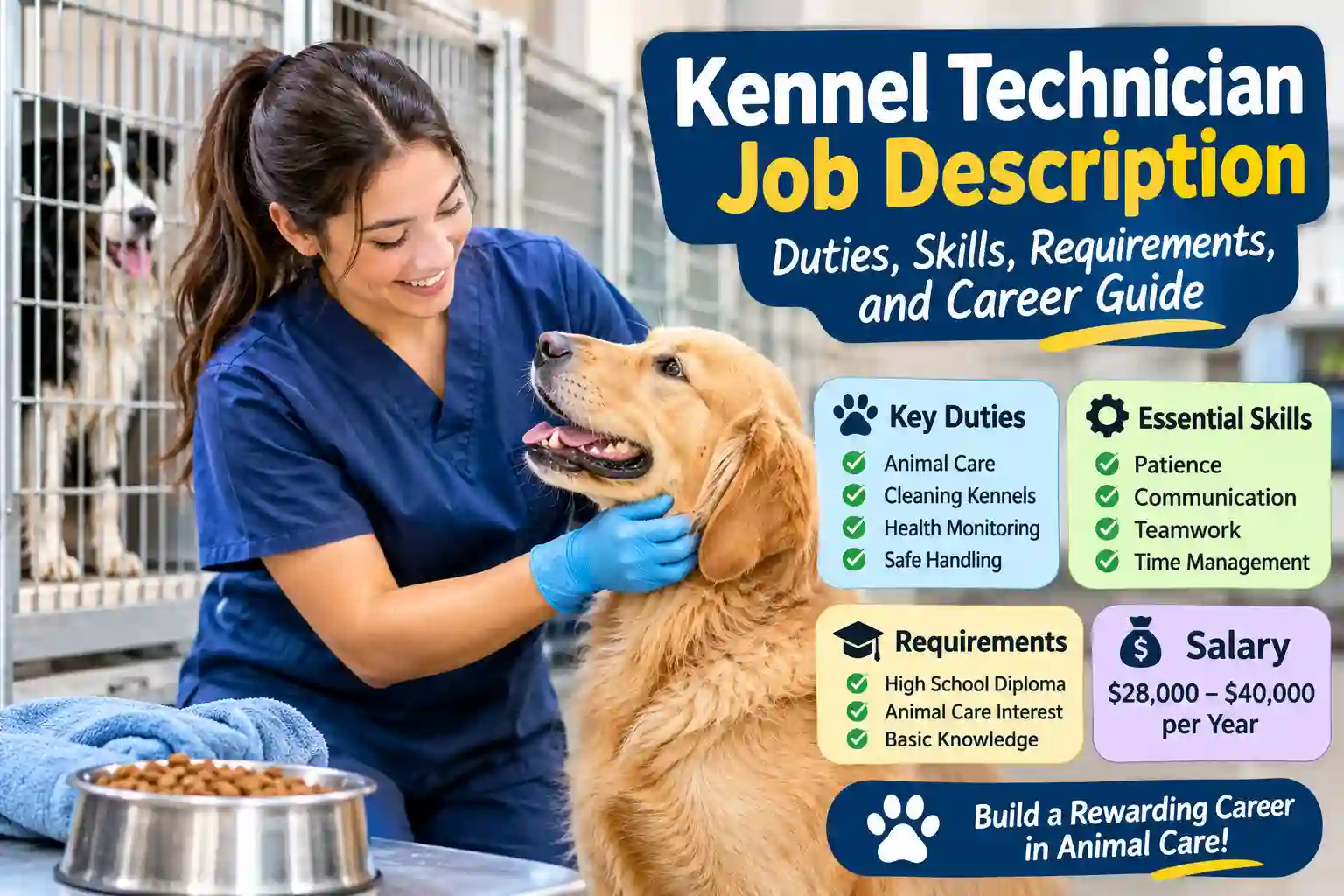
A kennel technician takes care of dogs, cats, and other animals in kennels, animal shelters, and veterinary clinics. This job includes feeding animals, cleaning their living areas, checking their health, and keeping them safe.
If you enjoy working with animals, becoming a kennel technician may be a good career choice. This guide explains the kennel technician job description, daily duties, skills, requirements, salary, training, and career options. You will also learn about animal care, kennel safety, cleaning, and how to prepare a resume.
What Is a Kennel Technician?

A kennel technician is an animal care worker who looks after pets while they stay in a kennel or animal care facility. The main goal is to keep animals clean, healthy, safe, and comfortable.
Kennel technicians mostly work with dogs and cats. Some may also care for other small or exotic animals, depending on the workplace.
They may work in:
- Veterinary clinics and hospitals
- Animal shelters
- Dog boarding kennels
- Pet resorts and daycare centers
- Animal rescue organizations
- Grooming facilities
- Research facilities
- Wildlife rehabilitation centers
A kennel technician may also be called a kennel assistant, kennel attendant, or animal care attendant. Job titles and duties can change from one employer to another.
Kennel Technician Job Duties and Responsibilities
Kennel technician job duties include daily animal care, cleaning, and safety tasks. Workers must follow care plans and make sure every animal receives proper attention.
Common responsibilities include:
- Giving animals fresh food and clean water.
- Cleaning kennels, cages, and sleeping areas.
- Washing food and water bowls.
- Walking dogs and providing daily exercise.
- Checking animals for signs of illness or injury.
- Watching changes in animal behavior.
- Giving approved medication under veterinary instructions.
- Helping with bathing and basic grooming.
- Keeping animal care records.
- Preparing clean bedding.
- Reporting health concerns to a supervisor or veterinarian.
- Helping with animal check-in and check-out.
Some kennel technicians may also help move animals, prepare them for veterinary procedures, or support animal adoption work.
A Typical Day in the Life of a Kennel Technician
A kennel technician follows a daily routine to keep animals healthy and comfortable. The exact schedule depends on the number of animals and the type of facility.
Morning Duties
- Check each animal for signs of illness.
- Give food and fresh water.
- Clean kennels and sleeping areas.
- Remove waste and dirty bedding.
- Take dogs outside for bathroom breaks.
Afternoon Duties
- Walk and exercise dogs.
- Provide safe play and enrichment activities.
- Wash bowls and cleaning tools.
- Watch animal behavior and appetite.
- Help with grooming or bathing when needed.
- Update animal care records.
Evening Duties
- Give animals their evening meals.
- Refill water bowls.
- Clean dirty areas.
- Prepare comfortable sleeping spaces.
- Check kennel doors and gates.
- Record important care information.
Some facilities also have overnight shifts, weekend work, and holiday schedules.
Kennel Technician Job Skills

A good kennel technician needs animal care skills and good communication skills. Workers must stay calm and patient, even when animals are scared or difficult to handle.
Important kennel technician job skills include:
- Patience: Some animals need time to feel safe.
- Animal handling: Workers must handle animals carefully.
- Communication: They must share important information with other staff.
- Cleaning skills: Kennels must stay clean and free from germs.
- Time management: Animals need food, water, and care on time.
- Observation: Workers should notice changes in animal health.
- Problem-solving: They must know when to ask for help.
- Teamwork: Kennel workers often work with veterinarians and other staff.
- Compassion: Animals need gentle and kind care.
- Physical stamina: The job may include standing, walking, and lifting supplies.
Knowledge of basic canine behavior and animal socialization can also help workers understand dogs better.
Kennel Technician Requirements
Most kennel technician jobs do not require a college degree. Many employers accept people with a high school diploma or GED certificate.
Common kennel technician requirements include:
- High school diploma or equivalent.
- Interest in animal care.
- Basic knowledge of animal behavior.
- Good communication skills.
- Ability to follow safety rules.
- Physical strength for daily tasks.
- Willingness to work flexible hours.
- Ability to work with a team.
Some employers may prefer applicants with animal care, grooming, or veterinary experience.
How to Become a Kennel Technician
You can become a kennel technician by learning basic animal care skills and getting practical experience.
Learn About Animal Care
Start by learning how to feed, clean, and handle animals. Read about dog behavior, animal health, and basic animal safety.
Get Practical Experience
You can volunteer at an animal shelter or rescue organization. This helps you learn how animal care facilities work.
Complete Basic Training
Some employers provide on-the-job training. You may also take animal care courses to improve your knowledge.
Learn Safe Animal Handling
Learn how to approach nervous dogs, use leashes correctly, and notice signs of fear or aggression.
Apply for Kennel Jobs
Look for jobs at veterinary clinics, animal shelters, boarding kennels, and pet care centers.
Kennel Technician Training Guide for Beginners

New workers need training before caring for animals on their own. Good training helps prevent accidents and keeps animals comfortable.
A beginner training program may cover:
- How to approach dogs safely.
- How to read basic animal body language.
- How to feed animals correctly.
- How to clean and disinfect kennels.
- How to notice signs of illness.
- How to use cleaning chemicals safely.
- How to keep animal care records.
- How to report an emergency.
- How to support animal enrichment.
- How to follow a feeding and medication schedule.
Some workplaces may teach low-stress animal handling. This method helps reduce fear and stress when workers care for animals.
New workers should ask an experienced staff member for help when handling an unfamiliar or aggressive animal.
Essential Kennel Cleaning and Sanitation Guide
Cleaning is one of the most important parts of kennel work. Dirty kennels can spread germs and make animals sick.
Kennel workers should:
- Remove animal waste as soon as possible.
- Wash food and water bowls.
- Clean floors and sleeping areas.
- Use approved cleaning products.
- Follow the correct disinfection steps.
- Keep clean and dirty supplies separate.
- Wash their hands after handling animals or waste.
- Let cleaned areas dry before animals return.
- Wash blankets and bedding when needed.
- Keep trash and laundry areas clean.
Good kennel sanitation helps prevent disease and keeps animals comfortable. Workers should follow the facility’s cleaning and hygiene rules.
How to Handle Dogs Safely in a Kennel
Safe dog handling protects both animals and workers. Some dogs may feel afraid, stressed, or angry in a new place.
Follow these basic rules:
- Approach dogs slowly and calmly.
- Avoid sudden movements.
- Give nervous dogs enough space.
- Never shout at or hit an animal.
- Use a leash when required.
- Follow the facility’s animal restraint rules.
- Do not force contact with a scared dog.
- Ask an experienced worker for help with difficult dogs.
Workers should learn basic canine behavior. Signs of stress may include growling, hiding, shaking, showing teeth, or refusing food.
Kennel Safety Rules Every Worker Should Know
Safety is important in every animal care facility. A small mistake can cause an injury to a worker or an animal.
Important kennel safety rules include:
- Keep gates and kennel doors closed.
- Check leashes and collars before walking dogs.
- Keep walkways free from water and objects.
- Store cleaning chemicals safely.
- Wear gloves when needed.
- Report bites, scratches, and injuries.
- Follow emergency plans.
- Never leave an animal in an unsafe area.
- Keep food and cleaning supplies separate.
- Know where first aid supplies are kept.
Workers should also learn basic animal first aid and know how to report an emergency. They should not try to perform medical treatment unless they are trained and allowed to do so.
Animal Care Tips for Kennel Workers
Good animal care means more than giving food and water. Animals also need exercise, rest, attention, and a clean place to live.
Kennel workers should:
- Follow each animal’s feeding plan.
- Give dogs regular bathroom breaks.
- Provide safe exercise and playtime.
- Keep sleeping areas comfortable.
- Watch for changes in appetite.
- Notice unusual behavior.
- Give shy animals time to adjust.
- Report health concerns to veterinary staff.
- Keep fresh water available.
- Follow special care instructions.
Some facilities use enrichment activities to support the mental well-being of animals. These may include safe toys, playtime, and simple activities that keep animals active.
How to Manage Stressful Dogs in a Kennel
Dogs may feel stressed when they are away from home. Loud sounds, new people, and other animals can make them nervous.
To help a stressed dog:
- Give it a quiet and safe space.
- Speak in a calm voice.
- Avoid forcing contact.
- Follow its normal feeding routine.
- Provide exercise when safe.
- Watch for signs of fear or aggression.
- Ask a supervisor for help if stress continues.
Some facilities use low-stress handling methods or behavior plans to help nervous animals. Workers should never punish a dog for showing fear.
Dog Kennel Daily Care Checklist
A daily checklist helps workers remember important tasks.
- Check all animals for health or behavior changes.
- Give fresh food and water.
- Clean kennels and sleeping areas.
- Wash food and water bowls.
- Take dogs outside for bathroom breaks.
- Provide exercise and playtime.
- Check gates, doors, and fences.
- Record meals and care tasks.
- Report health concerns.
- Prepare clean sleeping spaces.
The checklist may change depending on the facility and each animal’s needs.
Kennel Management: A Guide for Beginners
Kennel management means keeping an animal care facility clean, safe, and organized. It also includes making sure workers follow care plans and daily schedules.
Good kennel management includes:
- Creating feeding and cleaning schedules.
- Keeping animal records.
- Checking food and cleaning supplies.
- Organizing staff duties.
- Maintaining clean sleeping areas.
- Following health and safety rules.
- Managing animal care during busy hours.
- Checking kennel capacity.
- Making sure animals receive proper attention.
A kennel manager or supervisor may also train new workers and solve daily problems.
Kennel Technician Certification: Is It Required?

A kennel technician certification is not required for every job. Many employers provide basic training after hiring.
However, animal care courses and first aid training can help you build useful skills. Some employers may prefer applicants with certificates in animal care or low-stress animal handling.
A certificate does not replace veterinary training. Workers must only give medication or help with medical tasks when trained and allowed by the employer and local rules.
Kennel Technician Salary
Kennel technician salary depends on location, experience, employer, and job duties.
A worker at a small boarding kennel may earn a different amount from someone working at a large veterinary hospital.
Factors that can affect salary include:
- Years of experience.
- Type of animal care facility.
- Location.
- Working hours.
- Extra responsibilities.
- Training and certificates.
- Level of supervision.
Check current job listings and local salary information before applying for a position.
Kennel Technician Job Description for Resume
If you have worked with animals, you can describe your experience in a simple and clear way on your resume.
Kennel Technician Resume Example
Job Title: Kennel Technician
Responsibilities:
- Fed dogs and other animals according to care plans.
- Cleaned kennels and animal sleeping areas.
- Walked dogs and provided daily exercise.
- Watched animals for signs of illness or stress.
- Maintained clean food and water bowls.
- Followed animal safety and hygiene rules.
- Helped staff with daily animal care tasks.
- Updated animal care records.
Kennel Assistant Job Description for Resume
A kennel assistant may use these resume points:
- Helped feed and care for animals.
- Cleaned cages, kennels, and play areas.
- Refilled water bowls.
- Helped walk and exercise dogs.
- Followed instructions from senior staff.
- Reported changes in animal behavior.
Kennel Tech Job Description for Resume
For a kennel tech resume, focus on animal handling, cleaning, feeding, health observation, and teamwork. Only include duties you have actually performed.
Kennel Technician Interview Questions and Answers
Here are some common questions you may hear during a job interview.
Why do you want to become a kennel technician?
I enjoy working with animals and want to help keep them healthy, clean, and safe.
How would you handle a nervous dog?
I would stay calm, give the dog space, and follow the facility’s safety rules.
Can you clean kennels and handle daily physical tasks?
Yes. I understand that cleaning, lifting supplies, and walking dogs are important parts of this job.
What would you do if an animal looked sick?
I would report the problem to my supervisor or veterinarian as soon as possible.
Do you have experience with animals?
I would explain any real experience I have, such as caring for pets, volunteering, or working at an animal shelter.
Veterinary Kennel Technician Job Description
A veterinary kennel technician works in an animal hospital or veterinary clinic. This role includes caring for animals before and after medical treatment.
Common duties include:
- Feeding animals according to veterinary instructions.
- Cleaning recovery areas.
- Watching animals after procedures.
- Reporting changes in behavior or health.
- Helping veterinary staff with basic care.
- Keeping animal records.
- Moving animals safely when needed.
A veterinary kennel technician must follow instructions from trained veterinary staff. Medical tasks should only be performed when the worker is trained and allowed to do them.
Animal Shelter Kennel Technician Job Description
An animal shelter kennel technician cares for dogs and cats that need temporary homes.
Their duties may include:
- Feeding shelter animals.
- Cleaning cages and kennels.
- Walking dogs.
- Watching animal health and behavior.
- Helping new animals settle in.
- Keeping care records.
- Supporting safe animal handling.
- Helping staff prepare animals for adoption.
Shelter workers may also care for injured, frightened, or rescued animals. They should follow the shelter’s health and safety rules.
Dog Kennel Technician Job Description
A dog kennel technician mainly cares for dogs in boarding centers, shelters, and veterinary clinics.
Daily tasks may include feeding dogs, cleaning their kennels, walking them, giving them exercise, and checking their health.
The worker must understand basic dog behavior and know how to handle dogs safely. Some facilities may also ask workers to help with bathing, grooming, and play groups.
Kennel Technician vs. Kennel Assistant
These job titles are often used for similar work. Both roles may include feeding animals, cleaning kennels, and helping with daily care.
A kennel technician may have more responsibility for animal health checks, care records, and following special care plans. However, duties depend on the employer.
Kennel Technician vs. Veterinary Technician
A kennel technician mainly provides daily animal care and keeps kennels clean.
A veterinary technician has more formal education and training in veterinary care. Veterinary technicians may assist with medical procedures, lab work, and treatment under a veterinarian’s supervision.
These are different jobs with different training and legal requirements.
Lead Kennel Technician Job Description
A lead kennel technician has extra duties and may guide other kennel workers.
Common responsibilities include:
- Helping organize daily work.
- Checking cleaning standards.
- Training new employees.
- Reviewing animal care records.
- Reporting problems to management.
- Helping with difficult animal care tasks.
- Supporting safe animal handling.
This role usually requires work experience and strong leadership skills.
Kennel Supervisor Job Description
A kennel supervisor manages the daily work of a kennel facility. They help make sure animals receive proper care and staff members follow workplace rules.
Their duties may include:
- Managing kennel staff.
- Creating work schedules.
- Checking animal care routines.
- Ordering food and cleaning supplies.
- Keeping records organized.
- Training new workers.
- Solving daily problems.
- Maintaining safety standards.
- Checking staff and animal care needs.
A kennel supervisor usually needs experience in animal care and good management skills.
Petland Kennel Technician Job Description
A Petland kennel technician may help care for animals in a pet store environment. Exact duties depend on the store and its local policies.
Tasks may include:
- Feeding and watering animals.
- Cleaning animal living areas.
- Checking animal behavior.
- Keeping care records.
- Following hygiene rules.
- Reporting health concerns to the manager or veterinary staff.
Applicants should read the current job listing to understand the exact duties and requirements.
Kennel Technician Work Environment and Physical Requirements
Kennel technicians work in places where animals receive daily care. These workplaces can be busy and sometimes noisy.
The job may require:
- Standing and walking for long periods.
- Lifting food bags and supplies.
- Bending and cleaning floors.
- Handling animals of different sizes.
- Working indoors and outdoors.
- Cleaning animal waste.
- Working weekends or holidays.
- Working around noise, odors, and cleaning products.
Workers should be ready for physical tasks and follow all safety instructions. Some facilities may also have risks of bites and scratches.
Career Growth Opportunities for Kennel Technicians
A kennel technician can gain experience and move into other animal care jobs.
Possible career paths include:
- Senior kennel technician.
- Lead kennel technician.
- Kennel supervisor.
- Animal shelter worker.
- Veterinary assistant.
- Animal care manager.
- Pet boarding facility manager.
- Dog groomer.
- Animal trainer.
Some workers may also move into wildlife rehabilitation or research animal care after getting the right training.
Benefits and Challenges of Being a Kennel Technician
Benefits
- You can work with animals every day.
- You can learn useful animal care skills.
- You can help animals feel safe.
- You can gain experience in animal care.
- You may find chances to grow in your career.
Challenges
- The work can be physically tiring.
- Kennels need regular cleaning.
- Some animals may bite or scratch.
- You may work on weekends and holidays.
- Caring for sick or injured animals can be upsetting.
- Busy facilities may have loud sounds and strong smells.
Where Can You Find Kennel Technician Jobs Near You?

You can search online job websites, veterinary clinic pages, animal shelter websites, and local pet care centers.
Try search terms such as:
- Kennel technician jobs near me.
- Dog kennel jobs.
- Animal shelter jobs.
- Veterinary kennel technician jobs.
- Kennel assistant jobs.
- Animal care attendant jobs.
Read each job listing carefully. Check the location, salary, work hours, experience needs, and duties before applying.
Kennel Technician Job Description PDF Template for Employers
Employers can use this sample as a starting point for a kennel technician job description. You can copy it into a document and save it as a PDF.
We are looking for a caring and responsible kennel technician to look after animals in our facility. The right person will feed animals, clean kennels, provide exercise, and help keep every animal safe.
Main Duties:
- Feed animals and provide fresh water.
- Clean kennels and animal areas.
- Walk and exercise dogs.
- Watch animals for health or behavior changes.
- Follow safety and hygiene rules.
- Keep daily care records.
- Report concerns to the supervisor.
Requirements:
- Interest in animal care.
- Good communication skills.
- Ability to follow instructions.
- Willingness to perform physical tasks.
- Previous animal care experience is helpful but may not be required.
How to Apply:
Applicants can send their resume and contact details to the employer.
Frequently Asked Questions
A kennel technician feeds animals, cleans kennels, walks dogs, checks animal health, and helps keep animals safe.
Not always. Some employers hire beginners and provide training. Previous animal care experience can be helpful.
Certification is not required for every job. Some employers may prefer animal care training or related certificates.
Yes. It can be a good starting job for people who enjoy working with animals and are ready for physical tasks.
You can check local animal shelters, veterinary clinics, pet stores, boarding kennels, and online job websites.
Yes. Experience with animals can be useful when applying for veterinary assistant roles. Extra training may be needed.
Most kennel technicians care for dogs and cats. Some facilities may also care for exotic animals or other small pets.
Final Thoughts
A kennel technician plays an important role in animal care. This job includes feeding animals, cleaning kennels, walking dogs, checking health, and keeping animals safe.
People who enjoy working with animals may find this career rewarding. With good training, patience, and experience, a kennel technician can move into senior roles or other animal care jobs.

Sarah Whitman writes job descriptions and role guides that explain duties, skills and requirements in a clear, organized way. She covers technical, office and everyday roles, so job seekers, students and hiring teams can quickly see what a position involves.