

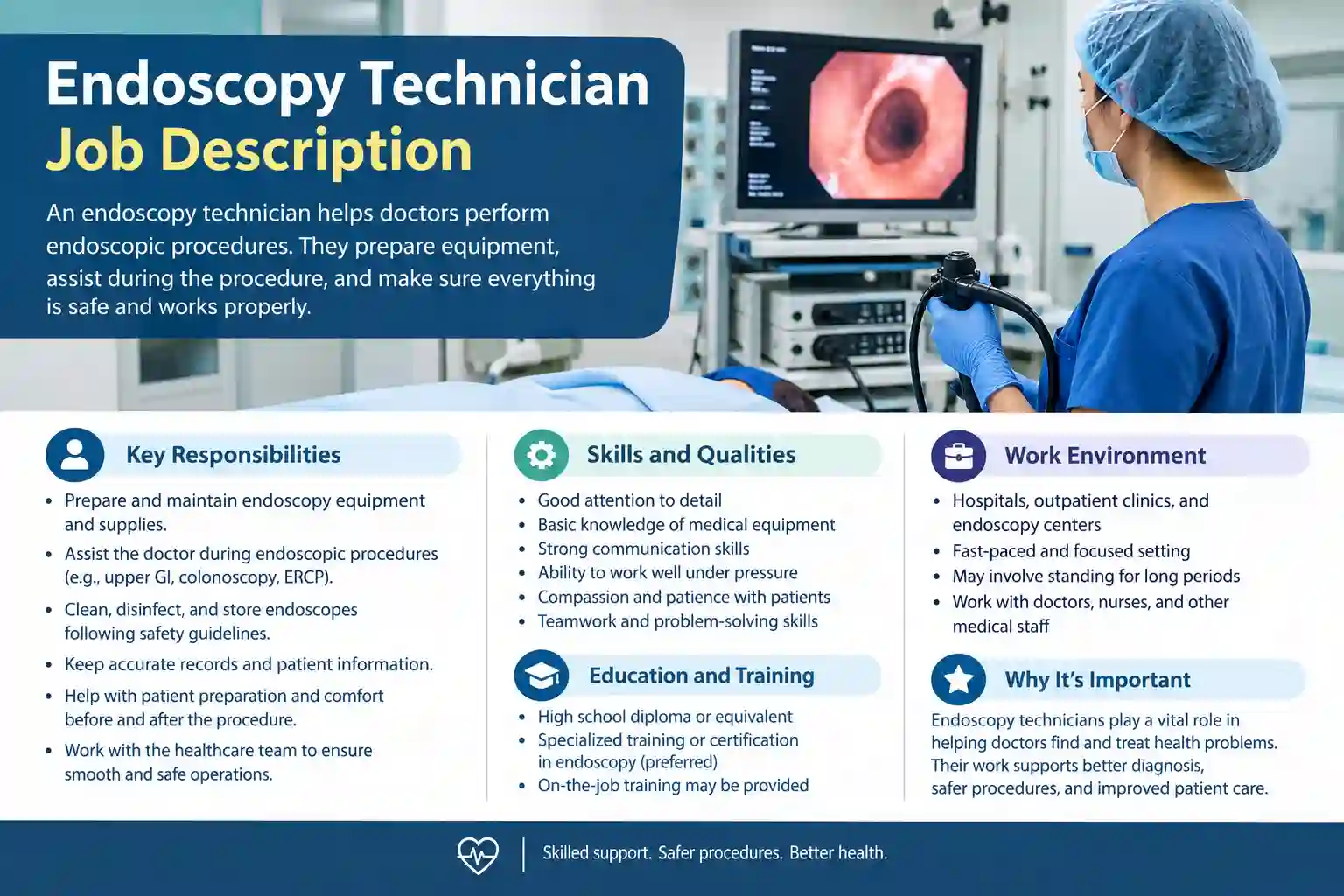
An endoscopy technician is an important member of a healthcare team. This professional helps doctors perform endoscopic procedures by preparing medical equipment, organizing supplies, and supporting patient care. Endoscopy technicians also help clean, disinfect, inspect, and store reusable endoscopes according to approved safety rules.
If you want to understand the endoscopy technician job description, this guide explains the main duties, required skills, education, certification, salary factors, and career opportunities. It also covers endoscopy equipment, medical procedures, specimen handling, infection control, and tips for finding endoscopy technician jobs.
What Is an Endoscopy Technician?
An endoscopy technician is a healthcare worker who helps prepare and manage equipment used during endoscopy procedures. An endoscope is a medical instrument that allows doctors to examine parts of the body.
Endoscopy technicians may work in hospitals, outpatient centers, gastroenterology departments, and specialized medical units. Depending on their training, they may also support pulmonary endoscopy procedures.
Their duties can include preparing procedure rooms, checking instruments, helping the medical team, handling specimens, and following approved equipment reprocessing procedures.

Endoscopy Technician Job Description Overview
The main purpose of an endoscopy technician is to help the healthcare team prepare for procedures and maintain safe, organized equipment.
Common job details include:
- Job title: Endoscopy Technician
- Department: Endoscopy, Gastroenterology, or a related medical unit
- Workplace: Hospitals, clinics, and outpatient centers
- Main duties: Equipment preparation, technical support, cleaning procedures, and record keeping
- Important skills: Attention to detail, teamwork, communication, and infection control knowledge
- Education: Depends on the employer and local requirements
- Experience: Some positions accept entry-level candidates, while others require previous healthcare experience
The exact responsibilities depend on the facility, job level, and local healthcare rules.
Endoscopy Technician Job Responsibilities
Endoscopy technician job responsibilities include preparing medical equipment, supporting doctors and nurses, and following workplace safety procedures.
Preparing the Procedure Room
The technician prepares the endoscopy room before each procedure. This may involve arranging the equipment, checking the supplies, and making sure the room is ready for the medical team.
The technician may also help with room turnover between procedures by following the facility’s cleaning and preparation rules.
Checking Endoscopy Equipment
Endoscopy equipment may include endoscopes, video monitors, light sources, video processors, suction equipment, and procedure-specific accessories.
The technician checks the equipment according to approved instructions. Any damage, unusual performance, or technical problem should be reported to the appropriate supervisor or biomedical equipment team.
Assisting During Procedures
During a procedure, the technician provides equipment and supplies as directed. The technician works with the endoscopist, nurses, and other healthcare professionals to support the procedure.
Some advanced procedures require specialized instruments and extra training. Technicians must only perform duties that match their training and assigned role.
Handling Specimens
Some procedures produce tissue samples or other specimens for laboratory testing. Depending on the role, the technician may help collect, label, organize, or transport specimens according to the facility’s policies.
Accurate labeling and documentation are important because specimens may be sent for pathology, cytology, microbiology, or other laboratory analysis.
Cleaning and Reprocessing Endoscopes
Reusable endoscopes must go through the required cleaning and reprocessing steps after use. Technicians follow approved instructions for cleaning, inspection, disinfection, drying, storage, and record keeping.
The exact process depends on the device, its intended use, the manufacturer’s instructions, and current infection control requirements.
Managing Supplies and Records
Technicians help organize medical supplies, check stock levels, and report items that need replacement. They may also complete equipment logs, reprocessing records, maintenance reports, and other required documentation.
Accurate records help the healthcare team track equipment use and support patient safety.
A Day in the Life of an Endoscopy Technician
A typical workday may begin with checking the procedure schedule and preparing the room. The technician checks that the required endoscopes, accessories, and supplies are available.
During procedures, the technician supports the medical team within the assigned role. After a procedure, used equipment is handled and reprocessed according to approved instructions.
The technician may also help manage specimens, report equipment problems, organize supplies, and complete records. Daily duties can change depending on the facility and the types of procedures being performed.

Types of Endoscopy Procedures
Endoscopy technicians may support different procedures depending on their workplace and training.
Upper Endoscopy or Gastroscopy
Upper endoscopy, also called gastroscopy or esophagogastroduodenoscopy (EGD), allows a doctor to examine the esophagus, stomach, and the first part of the small intestine.
Colonoscopy
A colonoscopy allows a doctor to examine the inside of the large intestine. The technician helps prepare the equipment and supplies required for the procedure.
Bronchoscopy
Bronchoscopy uses an endoscope to examine the airways and lungs. Technicians who work in pulmonary endoscopy may need training in equipment and procedures used in respiratory care.
ERCP
Endoscopic retrograde cholangiopancreatography (ERCP) is a specialized procedure used to examine and treat problems involving the bile ducts and pancreatic ducts. It may require specialized instruments and imaging equipment.
Endoscopic Ultrasound
Endoscopic ultrasound (EUS) combines an endoscope with ultrasound technology. It helps doctors examine structures inside and around the digestive tract.
Other Advanced Procedures
Some endoscopy departments support procedures such as endobronchial ultrasound (EBUS), double-balloon enteroscopy, balloon dilation, polypectomy, stent placement, and radiofrequency ablation.
Other procedures may include sphincterotomy or gastrostomy tube placement. The exact equipment and technician duties depend on the procedure, the facility, and the technician’s training.
Endoscopy Equipment and Tools
Endoscopy technicians should understand the basic equipment used in their department. Training helps them learn how to check, handle, and store each item safely.
Common Endoscopy Equipment
- Endoscope: A flexible or rigid medical instrument used to examine parts of the body.
- Video monitor: Displays images from the endoscope.
- Light source: Provides light for viewing during a procedure.
- Video processor: Processes images from compatible endoscopy systems.
- Suction equipment: Helps remove fluids when required.
- Biopsy forceps: Instruments used by trained medical staff to collect tissue samples.
- Snares: Instruments that may be used to remove certain growths during suitable procedures.
- Specimen containers: Containers used to hold specimens according to laboratory requirements.
- Reprocessing equipment: Equipment used in approved endoscope cleaning and disinfection processes.
- Protective equipment: Gloves, gowns, and eye or face protection when required.
Some departments also use fluoroscopy equipment, imaging systems, and specialized instruments for advanced procedures.
Technicians should follow the manufacturer’s instructions and workplace policies. Equipment that appears damaged or faulty must be reported rather than used without approval.
Endoscope Reprocessing: Steps, Safety, and Best Practices

Endoscope reprocessing helps reduce the risk of infection when reusable equipment is used for different patients. It requires proper training and careful attention to approved procedures.
Pre-Cleaning and Safe Transport
Used equipment is handled and transported according to the facility’s instructions. Staff use the required protective equipment and follow safety rules for contaminated instruments.
Cleaning and Inspection
The endoscope is cleaned using the approved process. Staff inspect the equipment for visible damage and other problems that may affect its safe use.
Some devices require leak testing according to the manufacturer’s instructions and the facility’s procedure.
Disinfection or Sterilization
The required process depends on the device and its intended use. Staff must follow the manufacturer’s instructions, current professional guidance, and local infection control requirements.
An automated endoscope reprocessor may be used when appropriate for the equipment and approved process.
Drying and Storage
After reprocessing, the endoscope must be dried and stored according to approved instructions. Correct storage helps protect the equipment from contamination.
Documentation and Traceability
Required records may include equipment identification, processing details, dates, and staff information. Traceability helps the facility track the equipment and review its processing history.
Important: Never skip a required reprocessing step. A technician should not replace approved procedures with informal cleaning methods.
Endoscopy Room Setup Checklist
A room setup checklist helps staff prepare for procedures in an organized way.
- Review the scheduled procedures.
- Check the endoscopy system and required accessories.
- Confirm that processed equipment is available and stored correctly.
- Check required supplies and specimen containers.
- Make sure the necessary protective equipment is available.
- Report damaged or faulty instruments.
- Follow patient positioning and room preparation instructions.
- Complete the checks and records required by the facility.
This is a general guide. Each healthcare facility should use its own approved checklist and procedure-specific instructions.
Endoscopy Technician Skills
Employers look for technicians who can work carefully, follow instructions, and support a busy healthcare team.
Technical Skills
Technical skills may include basic knowledge of endoscopy systems, equipment checks, medical supplies, specimen handling, and approved reprocessing procedures.
Attention to Detail
Technicians need to check equipment carefully, follow cleaning instructions, and record information accurately. Small errors in equipment handling or specimen labeling can affect patient safety.
Communication and Teamwork
Technicians communicate with doctors, nurses, endoscopists, supervisors, and other healthcare staff. Clear communication helps the team prepare for procedures and report problems.
Organization and Time Management
An endoscopy department may perform several procedures in one day. Technicians need to organize equipment and supplies so the team can work efficiently.
Infection Control Knowledge
Understanding hand hygiene, personal protective equipment, safe instrument handling, and approved disinfection procedures is an important part of the job.
Equipment Troubleshooting
Technicians may need to recognize common equipment problems and report them to the correct person. Repairs should only be completed by staff who are trained and authorized to perform them.

Endoscopy Technician Education and Training
Education requirements vary by employer and country. Some employers ask for a relevant healthcare diploma, paramedical qualification, or approved technician training program. Others may provide supervised workplace training for suitable candidates.
Training may cover:
- Medical terminology
- Endoscopy equipment and accessories
- Infection prevention
- Specimen handling and labeling
- Patient privacy
- Equipment checks and maintenance reporting
- Reprocessing documentation
- Emergency procedures relevant to the role
Before enrolling in a course, check whether the program is recognized by employers or relevant healthcare authorities in your area.
Endoscopy Technician Certification
Endoscopy technician certification can show that a person has completed a recognized training or assessment program. However, certification requirements vary by location and employer.
Some jobs may require a specific credential, while others may accept relevant education and supervised experience. Professional training resources, including those offered through gastroenterology-related organizations, may help candidates understand the skills needed for the field.
For example, the Society of Gastroenterology Nurses and Associates (SGNA) offers educational resources for professionals working in gastrointestinal endoscopy. Check the organization’s current requirements before assuming a particular program or credential is suitable for your role.
Also confirm whether CPR or Basic Life Support (BLS) certification is required by the employer.
How to Become an Endoscopy Technician
If you want to become an endoscopy technician, start by checking the requirements in your area.
- Research healthcare training programs related to endoscopy work.
- Check the education and experience required by local employers.
- Learn about infection control and safe equipment handling.
- Complete required training and supervised practice.
- Obtain any certification required for the position.
- Prepare a resume that explains your real education, training, and skills.
- Apply for suitable entry-level or experienced positions.
If you are new to healthcare, look for job advertisements that clearly explain entry-level requirements.
Endoscopy Technician vs. GI Technician
The terms endoscopy technician and GI technician may describe similar roles in some workplaces. GI stands for gastrointestinal, which relates to the digestive system.
Both roles may involve preparing equipment, organizing supplies, and supporting digestive system procedures. However, job titles and responsibilities are not the same everywhere.
Always read the full job description to understand the required training and duties.
Endoscopy Technician vs. Endoscopy Nurse
An endoscopy technician mainly focuses on equipment preparation, equipment handling, and other technical duties assigned by the employer.
An endoscopy nurse is a qualified nursing professional who may assess patients, provide nursing care, monitor patient condition, and support recovery within the nurse’s scope of practice.
The two roles work together, but they are not interchangeable. Education, licensing, and responsibilities differ.
Lead Endoscopy Technician Job Description
A lead endoscopy technician may help coordinate the work of other technicians and support the daily operation of the endoscopy department.
Responsibilities may include:
- Organizing equipment and supplies.
- Helping train or orient staff within the assigned role.
- Checking that required equipment records are completed.
- Reporting maintenance and safety concerns.
- Supporting approved infection control procedures.
- Helping coordinate procedure room readiness.
- Communicating with supervisors and other healthcare professionals.
- Supporting quality improvement and staff competency checks.
A lead technician may also help manage inventory, equipment standardization, and staff schedules. The exact duties depend on the facility.
Lead positions often require additional experience, technical knowledge, and strong organizational skills.
Endoscopy Decontamination Technician Job Description
An endoscopy decontamination technician focuses on the safe cleaning and reprocessing of reusable endoscopy equipment. This work may be part of a general endoscopy technician job or a separate position.
Typical responsibilities include safely handling used equipment, following approved cleaning and disinfection procedures, inspecting instruments, drying and storing equipment correctly, and completing required reprocessing records.
The technician may also report damaged equipment and follow traceability requirements.
Proper training is essential because incorrect reprocessing can create serious infection risks. Staff must follow the manufacturer’s instructions and the facility’s current policies.
Endoscopy Assistant Job Description
An endoscopy assistant supports the endoscopy team with duties assigned by the employer. Tasks may include preparing rooms, organizing supplies, helping with patient flow, and supporting equipment setup.
The role may require different qualifications from an endoscopy technician position. Applicants should check the job advertisement to understand the duties and training requirements.
Endoscopy Technician Salary
The endoscopy technician salary depends on location, education, experience, employer, and job responsibilities.
Technicians working in large hospitals or specialized facilities may receive different pay from those working in smaller clinics. Lead positions and roles that require advanced training may also have different salary ranges.
To research current salaries, compare recent job advertisements and reliable salary sources for your country. Check the experience level and required qualifications before comparing pay.

Endoscopy Technician Jobs
Endoscopy technician jobs may be available in hospitals, private clinics, outpatient centers, gastroenterology departments, and specialized medical units.
Search for job titles such as:
- Endoscopy Technician
- GI Technician
- Endoscopy Assistant
- Endoscopy Reprocessing Technician
- Endoscopy Decontamination Technician
- Lead Endoscopy Technician
These titles may describe different roles, so read the responsibilities carefully. Look at the education requirements, schedule, training opportunities, and location before applying.
Endoscopy Technician Jobs in Pakistan
In Pakistan, requirements may differ between public hospitals, private hospitals, and specialist medical centers. Candidates should check current vacancies and confirm the required diploma, experience, certification, or other credentials directly with the employer and relevant authorities.
Official hospital career pages and trusted job websites can help you find available positions. Always check the application deadline and make sure the vacancy is current.
Endoscopy Technician Job Description for Resume
Your resume should show your relevant education, training, technical skills, and work experience. Only include duties you have actually performed or learned through approved training.
Endoscopy Technician Resume Example
Professional Summary
Careful and organized healthcare professional seeking an Endoscopy Technician position. Interested in supporting medical staff, preparing equipment, following infection control procedures, and maintaining accurate records.
Relevant Skills
- Endoscopy equipment preparation
- Equipment checks and maintenance reporting
- Infection control awareness
- Specimen handling and documentation
- Medical supply organization
- Team communication
- Safe handling of medical instruments
Experience
Add your real work experience, clinical placement, or supervised training. Describe your actual duties and achievements clearly.
This endoscopy technician job description for a resume example is a starting point. Adjust it to match your experience and the requirements of the job.
Endoscopy Technician Job Description for CV
A CV can include your education, training, relevant certifications, work history, and technical skills.
If you have completed an endoscopy course or supervised placement, include the program name and the skills you learned. Experienced candidates can describe their real responsibilities, equipment knowledge, specimen handling duties, and workplace achievements.
A fresher can highlight relevant coursework, practical training, and transferable skills.
Endoscopy Technician Experience Certificate
An endoscopy technician experience certificate is an official document issued by an employer or authorized organization to confirm work experience.
It may include the employee’s job title, employment dates, and a summary of verified duties. If you need a certificate, contact your previous employer’s human resources department.
Make sure the information is accurate and the document is issued by an authorized person. Do not claim work experience or training that you have not completed.
Endoscopy Technician Interview Questions
Before an interview, learn about the employer and review the job responsibilities. Prepare examples from your real work or training experience.
You may be asked:
- What does an endoscopy technician do?
- How do you prepare an endoscopy room?
- Why is infection control important?
- What is endoscope reprocessing?
- Why are specimen labeling and documentation important?
- What would you do if equipment appeared damaged?
- How do you work with doctors and nurses?
- What training or certification have you completed?
Answer honestly. If you do not know a procedure, explain that you would follow approved instructions and ask the appropriate supervisor for guidance.
Endoscopy Technician Career Growth
With further training and relevant experience, an endoscopy technician may qualify for more advanced responsibilities.
Possible career paths include lead endoscopy technician, specialized reprocessing technician, equipment support roles, or endoscopy department coordination.
Some experienced staff may also support training, quality improvement, inventory management, or staff competency checks. Career opportunities depend on local rules, employer needs, and additional qualifications.
Frequently Asked Questions
An endoscopy technician is a healthcare worker who prepares, handles, and helps maintain equipment used during endoscopy procedures.
Main duties may include preparing procedure rooms, checking equipment, organizing supplies, supporting the medical team, handling specimens when assigned, and following approved reprocessing procedures.
Requirements vary by location and employer. Some positions require a relevant healthcare qualification, recognized training, certification, or previous experience.
It depends on the employer and local rules. Check the current requirements before choosing a training program.
Common equipment includes endoscopes, video monitors, light sources, video processors, suction equipment, procedure accessories, and reprocessing equipment.
Correct reprocessing helps reduce the risk of infection. Staff must follow approved cleaning, disinfection, drying, storage, and documentation procedures.
The titles may overlap, but responsibilities vary by facility. Read the job description to understand the exact duties.
A lead technician may help coordinate staff, organize supplies, support training, check records, and report equipment or safety concerns.
Salary depends on location, experience, qualifications, and the employer. Compare recent job listings in your area for useful information.
Endoscopy technician ka Urdu mein matlab hai اینڈوسکوپی کے آلات کا تکنیکی معاون. Yani aisa healthcare worker jo endoscopy ke equipment ki tayyari, dekh bhaal aur approved cleaning process mein madad karta hai.
Check official hospital career pages, trusted job websites, and relevant healthcare employers. Confirm the vacancy’s requirements and closing date before applying.
Final Thoughts
An endoscopy technician plays an important role in helping a healthcare team perform procedures safely and smoothly. The job may involve equipment preparation, room setup, technical support, specimen handling, endoscope reprocessing, and record keeping.
If you want to enter this field, research the training requirements in your area and build the skills needed for the role. Learning about endoscopy equipment, advanced procedures, infection control, and workplace safety can help you understand the profession and prepare for suitable job opportunities.

Sarah Whitman writes job descriptions and role guides that explain duties, skills and requirements in a clear, organized way. She covers technical, office and everyday roles, so job seekers, students and hiring teams can quickly see what a position involves.